Supporting Children’s Mental Health and Well-Being: Resources from the EMBRACE Future Project
Children’s mental health affects how they learn, communicate, build relationships, and respond to everyday challenges. Supporting their well-being requires age-appropriate materials that allow them to explore these experiences in a safe, accessible, and engaging way.
The EMBRACE Future project has developed complementary collections of resources for children, parents, and people working with children and teenagers aged 6-18:
- The EMBRACE Toolkit, comprising structured educational sessions adapted to three age groups (Explore the toolkit and related animated videos);
- The EMBRACE Public Awareness-Raising Campaign, which combines animations, practical guidance, quizzes, articles and insights shared by children (Access the EMBRACE PAC Page);
- The EMBRACE Characters, a cast of relatable hero and guide characters that help children and teenagers explore emotions, recognise their strengths and take an active role in their own well-being journey (Explore the EMBRACE Characters Page); and
- The 86 EMBRACE Animated Videos, including 30 classroom animation videos, other educational videos, and PAC-related videos available on the EMBRACE YouTube channel.
The materials can be used by children, parents, support teachers, educators, youth workers, school staff, psychologists and other professionals addressing children’s mental health, emotional literacy, participation and well-being.
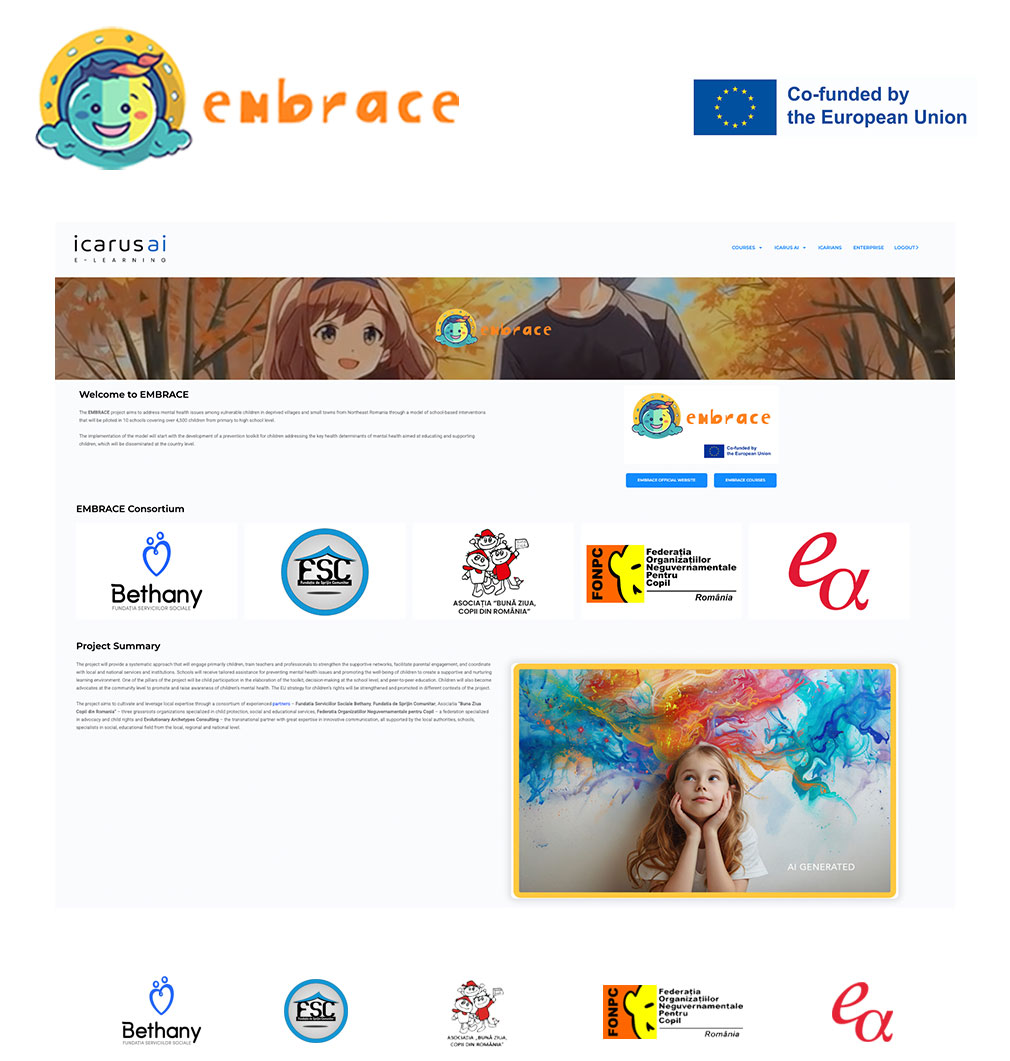
The EMBRACE Toolkit: Structured Activities for Three Age Groups
The EMBRACE Toolkit provides structured educational activities covering five interconnected dimensions of children’s well-being.
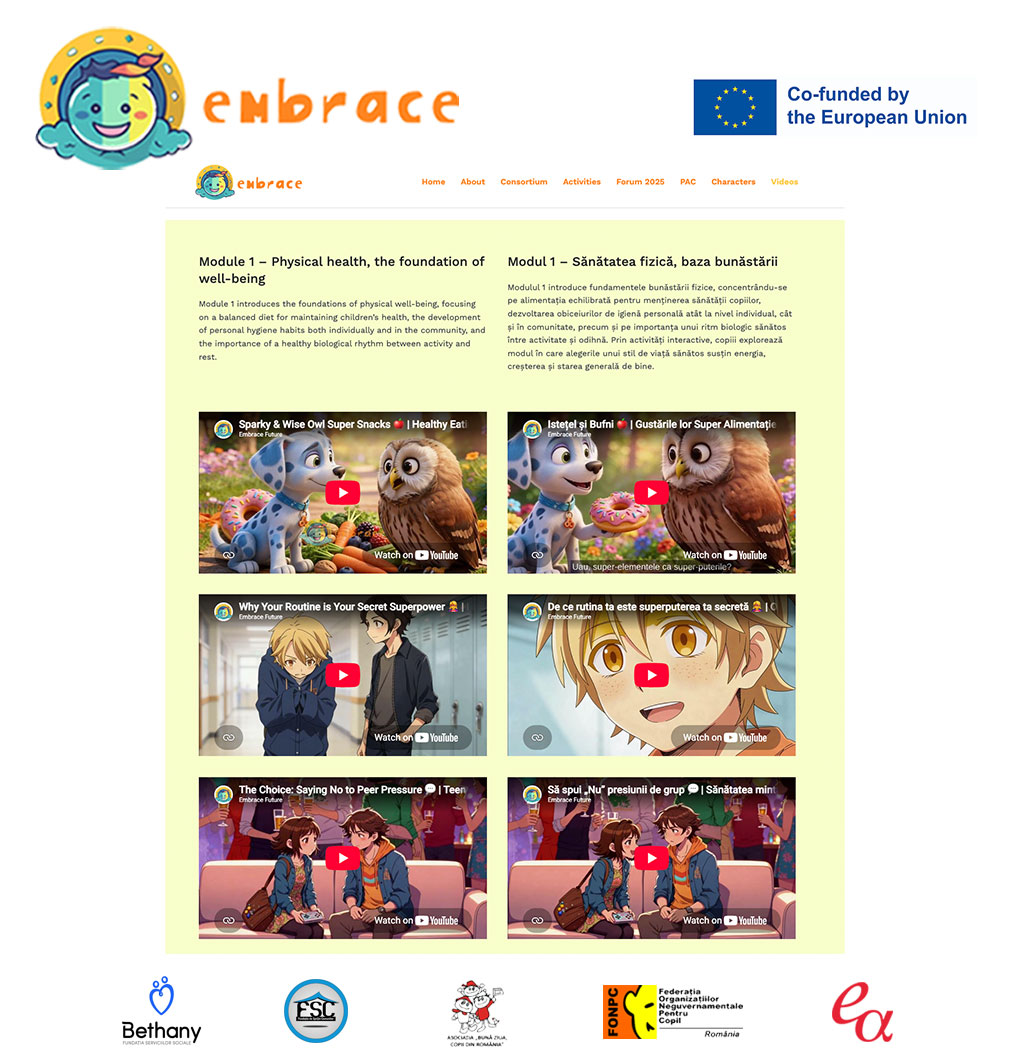
Module 1 – Physical health, the foundation of well-being
The first module explores the relationship between physical and mental well-being. Its sessions address balanced nutrition, personal hygiene, healthy routines and the importance of maintaining an appropriate balance between activity and rest.
Children consider how everyday habits can influence their energy, development, concentration and general well-being.
Module 2 – Cognitive well-being
This module helps children understand how the brain works and how information is processed. It introduces concepts connected to learning styles, attention, memory and motivation.
The activities encourage children to recognise both success and failure as parts of the learning process. They support curiosity, confidence and a positive approach to developing new knowledge and skills.
Module 3 – I’m okay with my emotions
The third module focuses on recognising, expressing and managing emotions.
Children explore different types of emotions, how emotions may be experienced and expressed, and how they can respond when an emotion becomes intense or difficult to manage. Its activities support emotional regulation, self-control, resilience and self-awareness.
Module 4 – Inner well-being
This module explores the values and beliefs that guide behaviour and decision-making.
Its sessions introduce topics including fairness, inclusion, empathy, dignity, children’s rights, equality and respect for diversity. Children are encouraged to consider how their choices affect others and how personal values can support responsible and ethical behaviour.
Module 5 – I’m socially well
The final module develops healthy social interaction and relationship-building skills.
Children explore communication, cooperation, group participation, empathy and personal boundaries. The module also helps them recognise unhealthy or unsafe social situations and consider how balanced, respectful relationships can be developed.
Three Age Levels
Each of the five modules contains three sessions adapted to three educational levels:
- Primary school: 6-10 years old
- Middle school: 11-14 years old
- High school: 15-18 years old
This structure produces 15 age-adapted courses and 45 sessions. With each session available in both English and Romanian, the Toolkit contains 30 courses and 90 language-specific session versions in total.
The complexity of the activities develops according to the age group. Younger children explore well-being through accessible stories, characters and guided exercises. Older students engage with situations involving identity, school pressures, relationships, decision-making, emotional regulation and self-advocacy.
Learning with the EMBRACE Squad
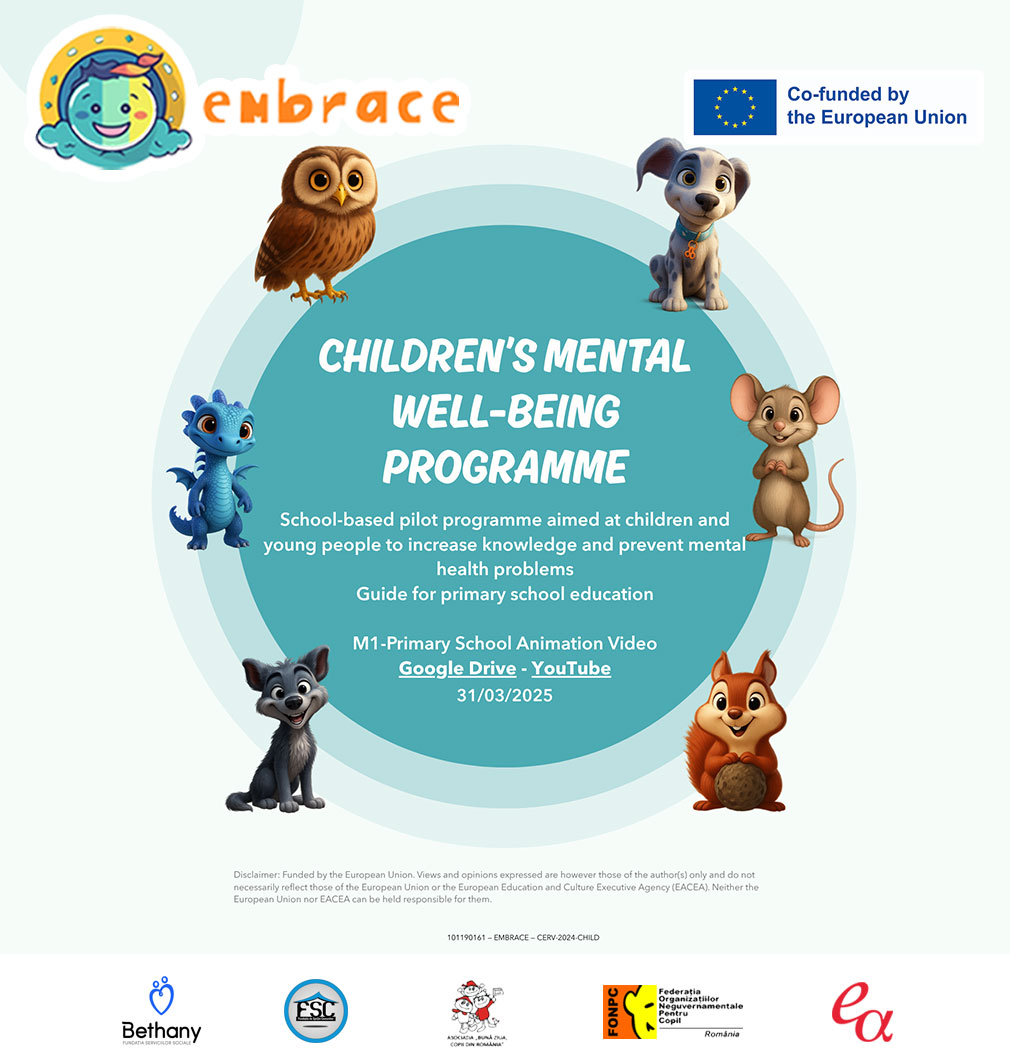
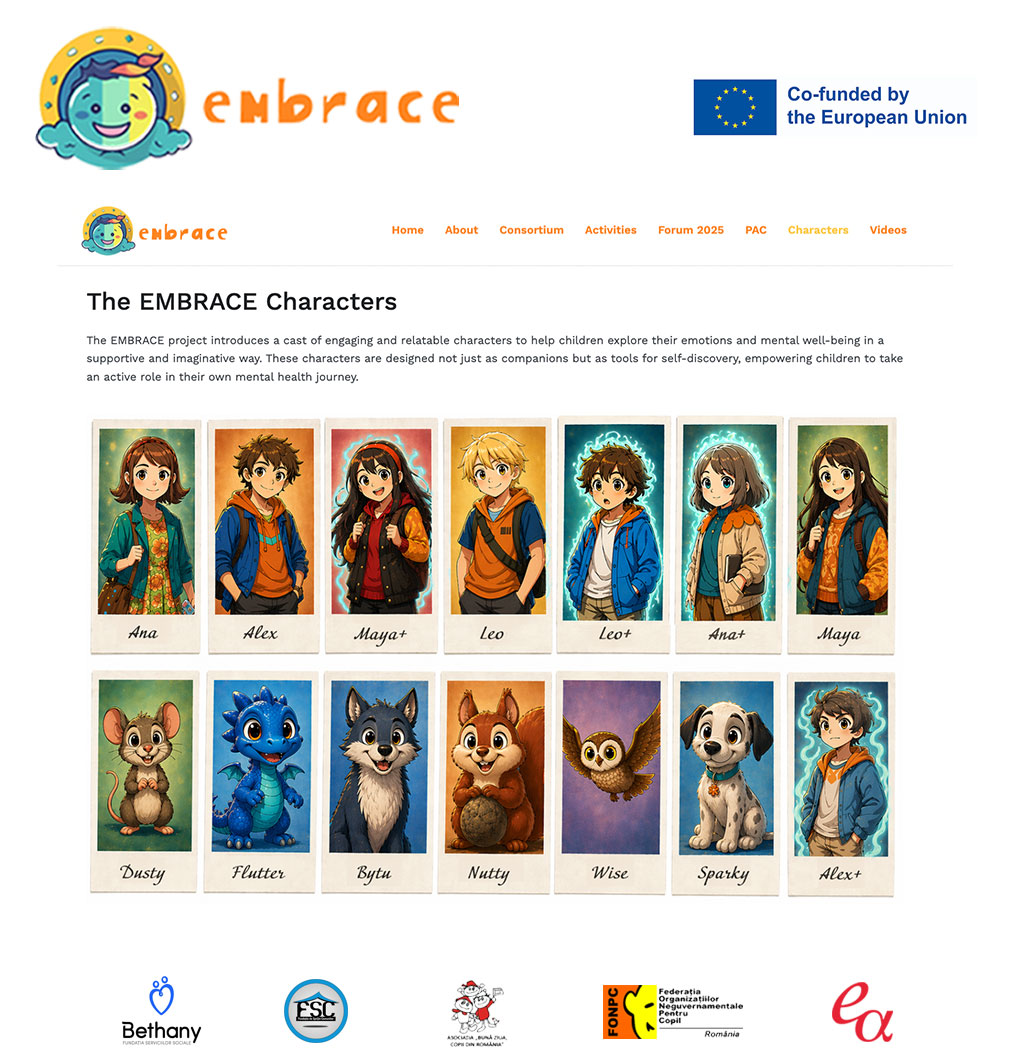
The Toolkit features the EMBRACE Squad, a cast of characters developed for children and teenagers at different educational stages.
Primary-school children meet Wise the Owl, Nutty, Sparky, Flutter, Dusty and Bytu. Middle-school materials feature Maya and Leo, accompanied by their inner guides, Maya+ and Leo+. High-school students are introduced to Ana and Alex alongside Ana+ and Alex+.
The characters are not assigned to learners according to gender. Children and teenagers are invited to connect with the characters whose experiences, strengths and challenges most closely reflect their own.
Each Toolkit module is also supported by at least one animated classroom video for every age group. The videos present topics such as healthy eating, routines, peer pressure, curiosity, learning, strong emotions, stress, personal values, empathy, inclusion, belonging and assertive communication.
Educators can use the animations to introduce a session, begin a group discussion, or help learners connect a broader well-being topic with situations they may encounter in everyday life.
The EMBRACE Public Awareness-Raising Campaign: #KnowEmotions / #DescoperăEmoțiile
The EMBRACE Public Awareness-Raising Campaign, developed under the motto #KnowEmotions / #DescoperăEmoțiile, encouraged more open conversations about children’s emotions and mental health.
Introduced in September 2025, the campaign gained public momentum around World Mental Health Day in October 2025 and continued until May 2026. It combined awareness-raising, storytelling, practical guidance, interactive activities and child participation.
Its materials were developed to help children and teenagers recognise emotions, understand their meaning and identify healthy ways to respond. They also provide adults with information that can help them listen to children and support their emotional well-being.
Children’s Participation in the Campaign
The EMBRACE Children’s Forum, held in Bucharest on 17-18 October 2025, gave children and young people space to share their perspectives, communicate their needs and contribute ideas for safer, more supportive schools and communities.
Their reflections informed four animations:
- Don’t Just Tell Me It Will Be OKAY!
- My Voice in School
- From Idea to Action – Building Real Solutions
- Social Media and My Well-being
The videos address emotional support, participation in school, the importance of acting on children’s ideas, and the relationship between social media and well-being.
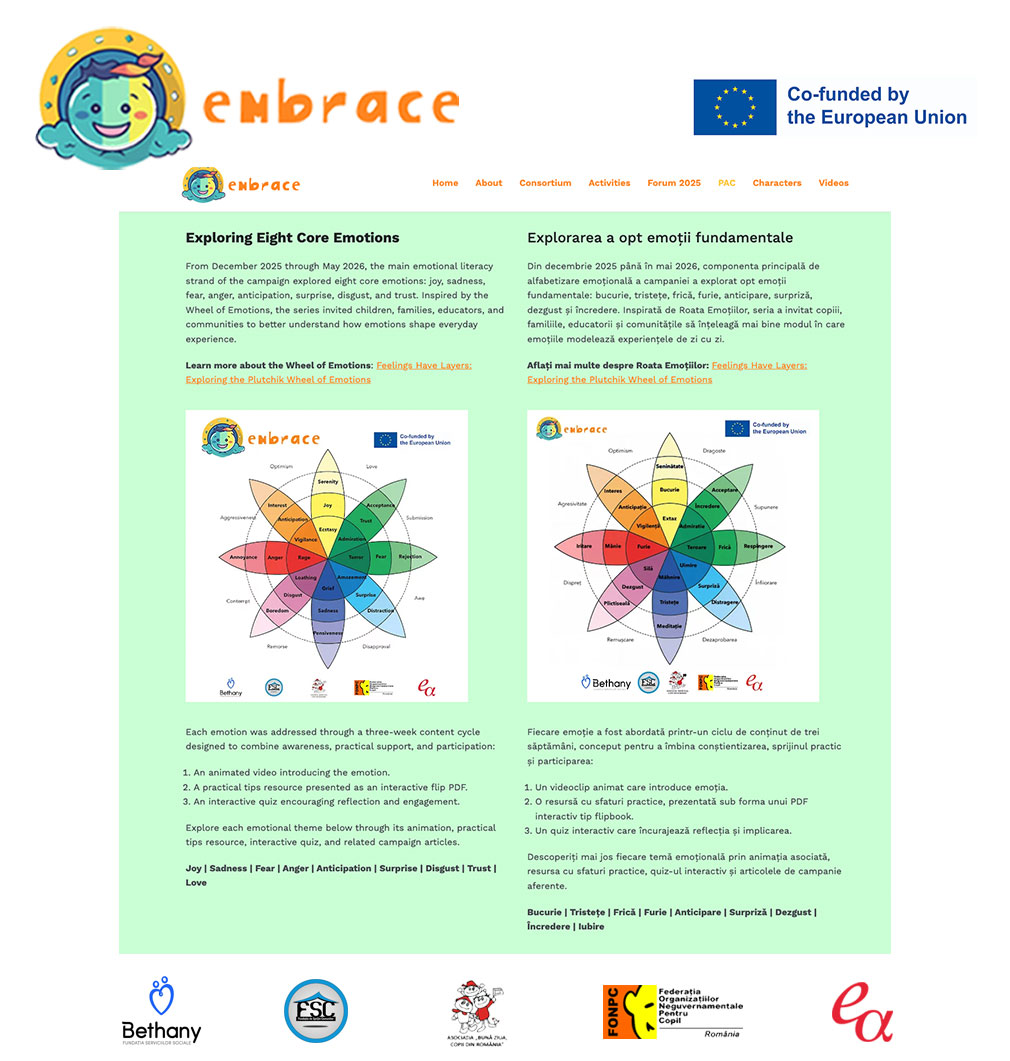
Exploring Eight Core Emotions & Love
The main emotional literacy strand of the campaign explored eight core emotions inspired by the Plutchik Wheel of Emotions:
- Joy
- Sadness
- Fear
- Anger
- Anticipation
- Surprise
- Disgust
- Trust
Each core emotion was addressed through a three-week content cycle consisting of:
- An animated video introducing the emotion, also featured on the EMBRACE YouTube channel
- A practical tips resource available as both a downloadable PDF and an online flipbook
- An interactive Mentimeter quiz encouraging reflection and participation
Related articles provided additional explanations and guidance for children, families and educators.
The campaign concluded with love, selected in consultation with the EMBRACE Future team of psychologists because of its connection to care, attachment, belonging and human connection.
The complete campaign page brings these materials together, allowing users to explore each emotional theme through its animation, practical tips, quiz and related content.
Using the EMBRACE Resources
The Toolkit, PAC materials, characters and videos can be used separately or together according to the needs of children, families, educators and professionals working with young people.
The Toolkit offers structured sessions that teachers, educators, youth workers, psychologists and other professionals can incorporate into planned learning and well-being activities. The PAC materials provide shorter animations, practical tips, quizzes and interactive resources that can help children and teenagers develop emotional literacy, while also giving parents, caregivers and educators guidance for supporting them.
The EMBRACE characters can be downloaded and used by children, families and educators to encourage reflection, storytelling and conversations about emotions and well-being. The animated videos can be viewed at home, in schools or in other educational and community settings, either independently or as an introduction to a discussion or activity.
Together, the resources can help children and teenagers:
- Recognise, understand and express their emotions
- Strengthen their emotional vocabulary
- Reflect on their experiences, needs and strengths
- Explore healthy habits and coping strategies
- Develop empathy, communication and relationship-building skills
- Participate more actively in decisions that affect them and express their views
They can help parents, caregivers and families:
- Begin age-appropriate conversations about mental health and well-being
- Better understand and respond to children’s emotions
- Help children develop healthy routines, communication skills and emotional regulation
- Create a safe environment in which children feel heard and supported
They can help educators and other professionals:
- Introduce well-being and emotional literacy into educational and community-based activities
- Address empathy, inclusion and respect for diversity
- Support children’s participation, self-expression and self-advocacy
- Adapt activities to different ages, abilities and learning contexts
- Facilitate discussions about relationships, school pressures and everyday challenges
Access All Resources
-
- EMBRACE Toolkit & Animated Classroom Videos: https://embrace-future.eu/classroom-animation-videos/
- EMBRACE Toolkit Courses on ICARUS: https://icarus.education/embrace-future/
- EMBRACE PAC: https://embrace-future.eu/pac/
- EMBRACE Characters: https://embrace-future.eu/the-embrace-characters/
- All EMBRACE Videos: https://www.youtube.com/@EmbraceFutureCerv
About EMBRACE
The EMBRACE project was implemented by a European consortium composed of Fundatia Serviciilor Sociale Bethany (FSSB), Fundatia de Sprijin Comunitar (FSC), Asociatia “Bună Ziua, Copii din România” (BZRO), Federatia Organizatiilor Neguvernamentale pentru Copil (FONPC), and Evolutionary Archetypes Consulting SL (EAC).
Funding Agency: EACEA – European Education and Culture Executive Agency
Learn more about EMBRACE: embrace-future.eu
Project: 101190161 — EMBRACE — CERV-2024-CHILD
Disclaimer: Funded by the European Union. Views and opinions expressed are however those of the author(s) only and do not necessarily reflect those of the European Union or the European Education and Culture Executive Agency (EACEA). Neither the European Union nor EACEA can be held responsible for them.