ARISE 2027 Intake: Apply for the Master’s in Human-Computer Interaction and Extended Reality
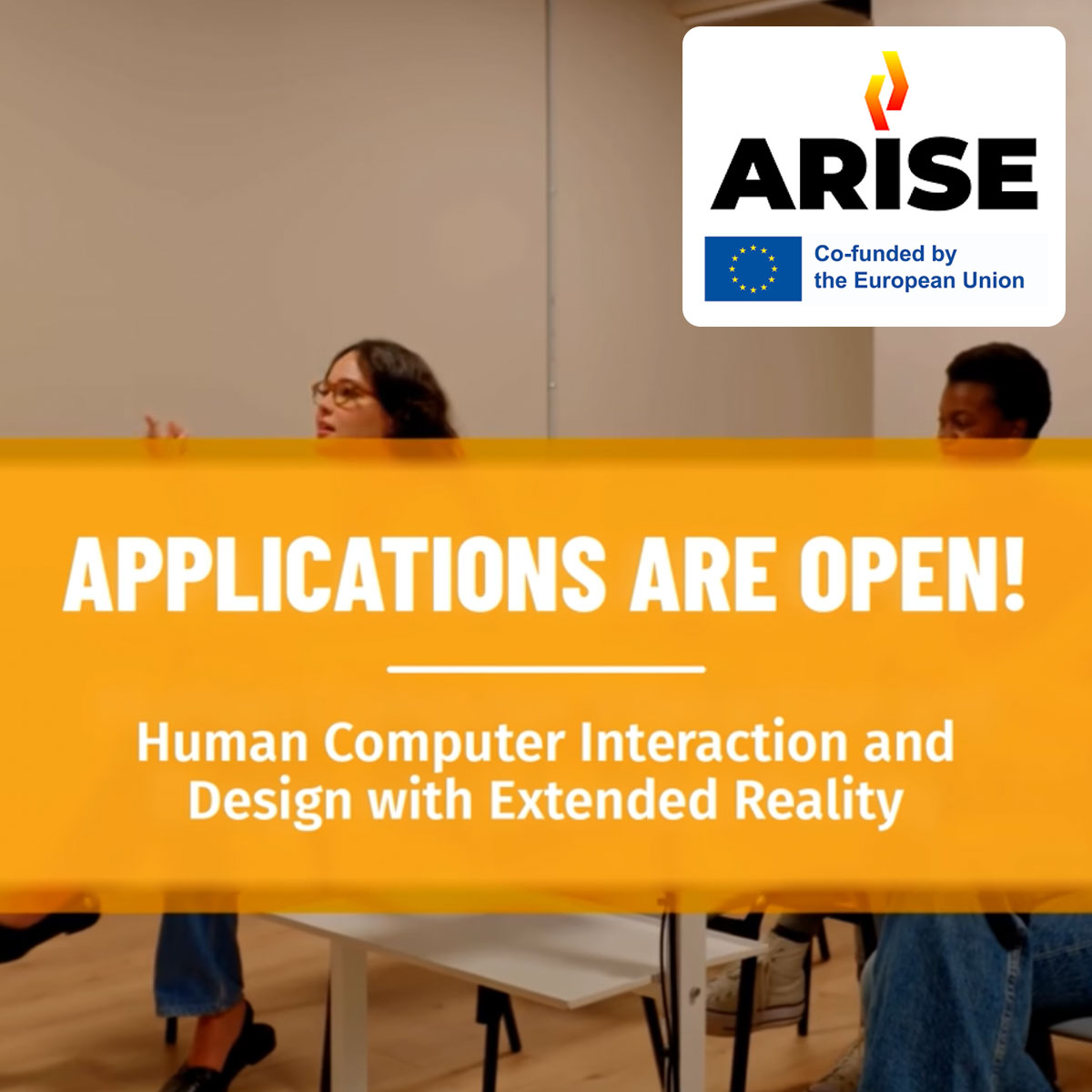
Are you ready to design technology that people can interact with through gestures, voice, and gaze? Applications are officially open for the 2027 intake of the ARISE Master’s in Human-Computer Interaction and Design with Extended Reality (HCID/XR). This two-year programme combines human-centred design, immersive technologies, and entrepreneurship. Developed in collaboration with the EIT Digital Master School, the dual-degree structure allows students to study at two different European universities and earn two degrees.
A Curriculum Built for Innovation
The ARISE programme prepares students to shape the future of immersive technology. Throughout the course, you will prototype immersive applications and collaborate directly with XR startups and research labs. The curriculum also includes a minor in Innovation and Entrepreneurship, a dedicated two-week Summer School, and a graduation project that features an industry internship.
Who Should Apply?
The programme is designed for Bachelor’s graduates and final-year students in fields such as Computer Science, Information Systems, Interaction Design, Cognitive Science, or Engineering. We also welcome applicants with relevant professional or research experience in HCI, UX, or XR development. Whether you want to prepare for a career in XR design, human-centred product development, or launch your own immersive tech startup, this programme gives you the tools to succeed.
Explore the programme and apply today: https://28digital.ea.education/arise/
Application Period 1 closes on 31 January 2027.
Official Website of the EU-Co-Funded Project ARISE: https://28digital.eu/eu-collaborations/arise
e-Learning Platform (in case the post is about online classes): https://eit.icarus.education/arise/
Project Number: 101225600 — ARISE — DIGITAL-2024-ADVANCED-DIGITAL-07-KEYCAPACITY
Co-funded by the European Union. Views and opinions expressed are however those of the author(s) only and do not necessarily reflect those of the European Union or HADEA. Neither the European Union nor the granting authority can be held responsible for them.