
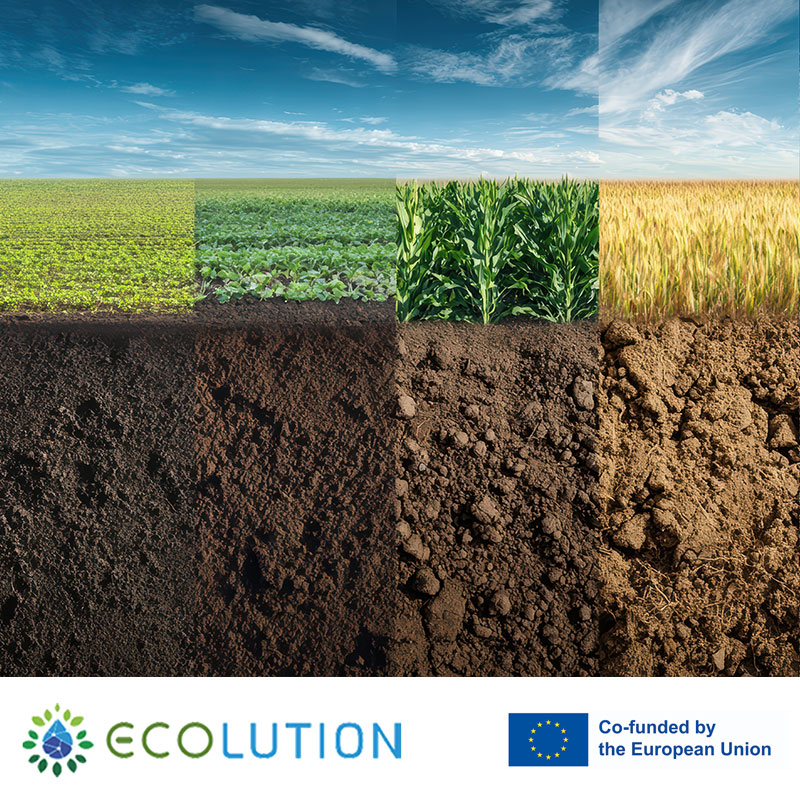
Importance of Healthy Soils
Healthy soils are often taken for granted, yet they play a fundamental role in our everyday lives. They support food production, regulate water, store carbon, sustain biodiversity, and contribute to climate resilience. Despite their importance, soils are under increasing pressure from erosion, pollution, land degradation, and the impacts of climate change. Protecting this resource begins with understanding its condition.
EU’s Soil Monitoring Law
Recognising this need, the European Commission has proposed a Soil Monitoring Law, an initiative designed to establish a common framework for monitoring soil health across the European Union, as part of the EU Soil Strategy for 2030. The proposal aims to improve knowledge of soil conditions, support sustainable soil management, and help Member States collect consistent and comparable data to better protect soils in the years ahead.
Source: Soil Monitoring Law
Why Soil Monitoring Matters
The proposal reflects an important shift in how soil protection is approached. Before effective action can be taken, reliable information is needed. Monitoring allows scientists, policymakers, and land managers to understand how soils are changing over time, identify emerging risks, and evaluate whether management practices are improving or degrading soil health.
Turning Environmental Data into Knowledge
Environmental data becomes valuable when it can be analysed, interpreted, and transformed into practical knowledge that supports decision-making. Digital technologies are playing an increasingly important role in this process, allowing large volumes of environmental information to be organised, visualised, and applied more efficiently than ever before.
This is where digital soil mapping becomes particularly relevant.
What Is Digital Soil Mapping?
Digital soil mapping combines environmental observations, spatial information, and analytical methods to produce detailed representations of soil characteristics across landscapes. Rather than relying solely on traditional field surveys, digital approaches make it possible to integrate different sources of information and build a more comprehensive understanding of soil conditions.
Applications in Environmental Management
These technologies can support a wide range of environmental activities, including land-use planning, sustainable agriculture, ecosystem restoration, and natural resource management. As monitoring programmes continue to expand across Europe, the ability to work with soil data is becoming an increasingly valuable skill for environmental professionals.
Learning Digital Soil Mapping Through ECOLUTION
Within the ECOLUTION Project, the course Digital Soil Mapping, Management & Protection (2W1), available to students through the ECOLUTION e-Learning Platform, introduces students to this field by exploring how digital technologies support the collection, analysis, and management of soil information.
The course covers topics including:
- Digital soil mapping techniques
- Soil monitoring and management
- Spatial analysis and environmental data
- Sustainable approaches to soil protection
Together, these areas help students understand how environmental information can be transformed into practical knowledge that supports better management decisions.
Combining Environmental Science and Digital Technology
This reflects one of the broader aims of the ECOLUTION Project: combining environmental science with digital technologies to prepare graduates for emerging challenges in smart environmental sustainability.
Soil Health as a European Policy Priority
As environmental pressures continue to evolve, professionals increasingly need the ability to interpret environmental data alongside understanding the systems they are working to protect. Soil monitoring is therefore not simply about collecting measurements; it is about creating the knowledge needed to manage one of Europe’s most important natural resources responsibly.
Preparing Future Environmental Professionals
The proposed Soil Monitoring Law demonstrates that this knowledge is becoming a policy priority across Europe. Establishing a common monitoring framework is intended to improve consistency, strengthen understanding of soil health, and support more informed environmental management in the future.
For students entering the environmental sector, this creates an opportunity to develop skills that are closely connected to evolving European priorities. Learning how to map, analyse, and interpret soil information prepares future professionals to contribute to sustainable land management, environmental protection, and evidence-based decision-making.
Building a Sustainable Future from the Ground Up
As Europe continues investing in healthier soils, digital technologies and environmental expertise will increasingly work hand in hand. Developing the knowledge to combine both is an important step towards protecting natural resources for future generations.
Funding Agency: EACEA – European Education and Culture Executive Agency
Learn more about ECOLUTION: https://www.ecolutionmsc.eu/
101140050 — ECOLUTION — ERASMUS-EDU-2023-PI-ALL-INNO
Disclaimer: Funded by the European Union. Views and opinions expressed are however those of the author(s) only and do not necessarily reflect those of the European Union or the European Education and Culture Executive Agency (EACEA). Neither the European Union nor EACEA can be held responsible for them.