Quantum computing is often described as one of the technologies that could shape the future of computing. While the concept can seem complex, the key difference between quantum and classical computers begins with how they process information.
Classical computers use bits, where each bit can represent either a 0 or a 1. Quantum computers, on the other hand, use qubits. Thanks to the principles of quantum mechanics, qubits can represent 0, 1, or a combination of both states at the same time. This allows quantum computers to approach certain types of problems in fundamentally different ways.
This does not mean that quantum computers will replace the laptops or smartphones we use every day. Instead, they are being developed to tackle highly specialised problems in areas such as scientific research, optimisation, materials science, and cryptography, where conventional computers may struggle with the scale or complexity of the calculations involved.
As interest in quantum technologies continues to grow, understanding the broader computing landscape is becoming increasingly important. Quantum computing is part of a wider ecosystem that also includes cloud computing, networking infrastructure, and high-performance computing, with each technology playing a different role in supporting research, innovation, and digital services.
These topics are explored within ACHIEVE through the Double Degree Master’s programme in “Cloud and Networking Infrastructure and HPC”, part of the EIT Digital Master School. Students study in two different European countries while developing expertise in cloud computing, networking infrastructure, HPC, and emerging computing technologies.
The collaboration includes Evolutionary Archetypes Consulting SL, focusing on employability and applied learning, alongside 28DIGITAL, which supports the programme’s integration within the European digital skills ecosystem.
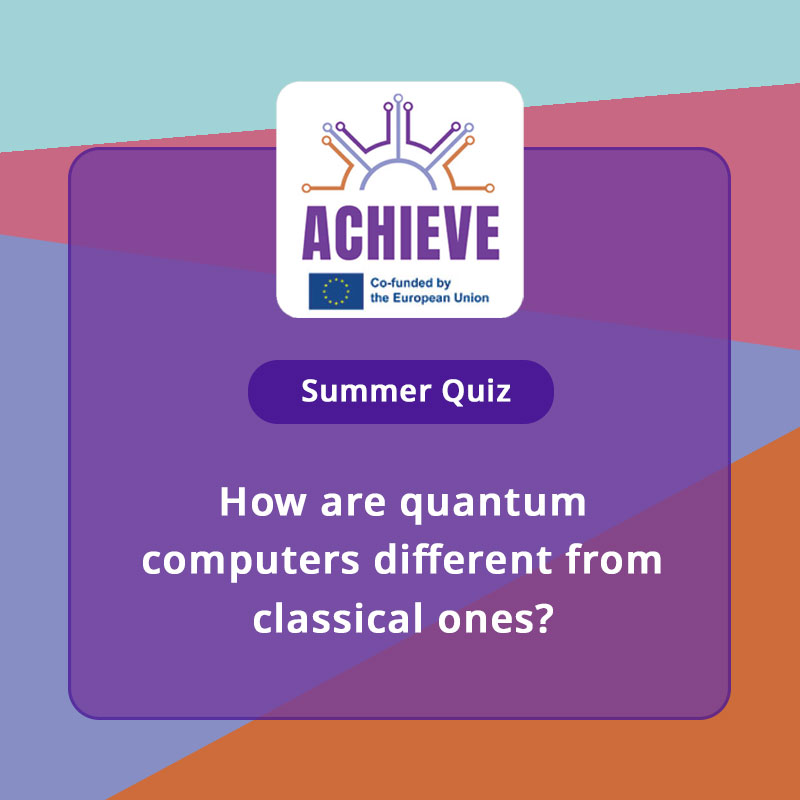
The ACHIEVE Summer Quiz is designed to make topics like quantum computing more accessible to a wider audience, encouraging people to test their knowledge while discovering how emerging technologies are shaping the future of Europe’s digital landscape.
Learn more about ACHIEVE: https://28digital.eu/eu-collaborations/achieve
101190015 — ACHIEVE — DIGITAL-2023-SKILLS-05
Disclaimer: Co-Funded by the European Union. Views and opinions expressed are however those of the author(s) only and do not necessarily reflect those of the European Union or HADEA. Neither the European Union nor the granting authority can be held responsible for them.