What Happens to Our Waste Matters – And So Does How We Teach It
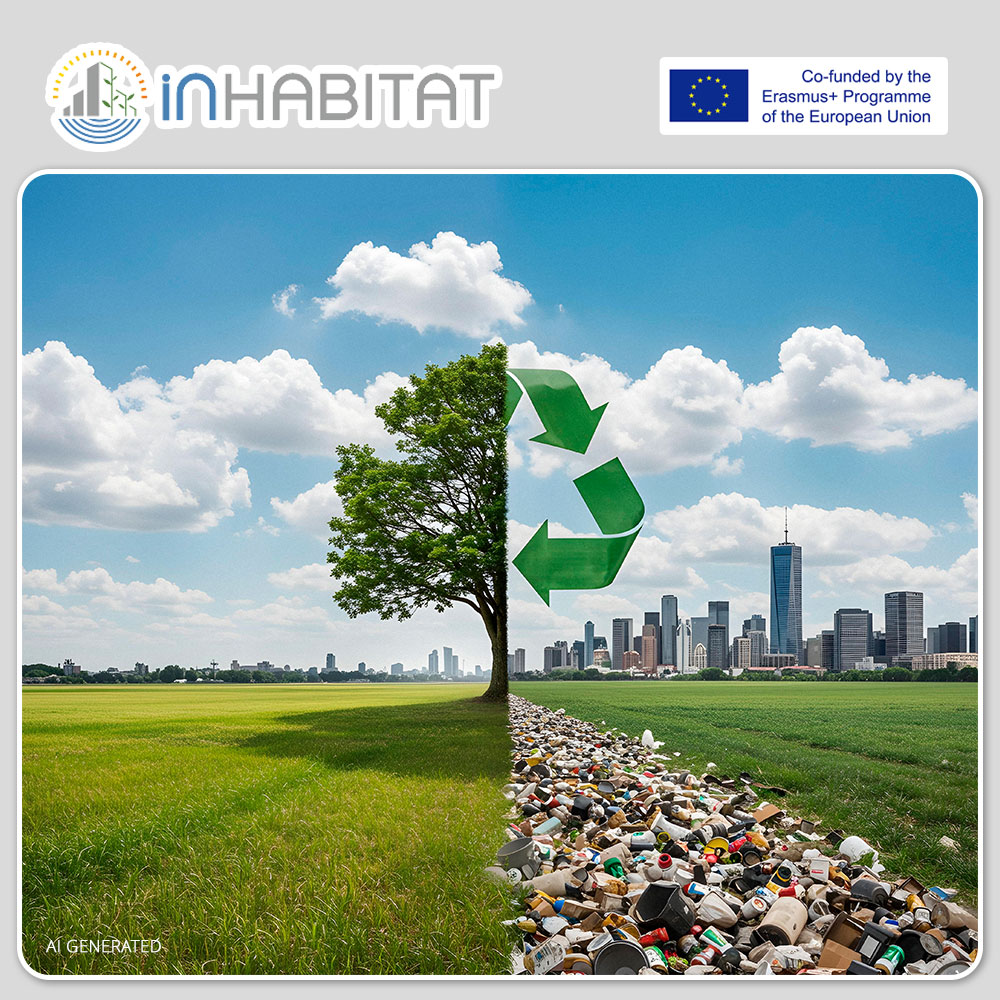
Why should tomorrow’s citymakers study waste treatment?
Because waste isn’t just a byproduct of urban life, it’s a systems challenge tied to climate, health, and circularity.
📚 That’s why the INHABITAT Project includes a dedicated 9 ECTS course on Waste Treatment.
In this module, students explore:
• Sustainable strategies for recycling plastics, metals, and e-waste
• Environmental and health impacts of mismanaged e-waste
• Biological, chemical, and advanced wastewater treatment technologies
• Life cycle assessment (LCA) applied to waste systems
• How to integrate circular economy principles into waste design
• Policy analysis and real-world case studies on urban waste solutions
Through hands-on labs and systems thinking, students learn how to design smarter waste treatment strategies that reduce pollution, recover resources, and support urban sustainability.
Why does it matter?
Because cities generate over 2 billion tons of solid waste each year, and how we manage it directly impacts climate, water, and public health.
Source: What a Waste 2.0: A Global Snapshot of Solid Waste Management to 2050
Learn more about the courses: https://inhabitat.ea.consulting/
101108631 — INHABITAT — ERASMUS-EDU-2022-PI-ALL-INNO
Disclaimer: Co-funded by the European Union. Views and opinions expressed are however those of the author(s) only and do not necessarily reflect those of the European Union or EACEA. Neither the European Union nor the granting authority can be held responsible for them.