When people talk about what makes a city enjoyable to live in, the conversation often focuses on architecture, culture, or the cost of living. But everyday urban experience is shaped by something much more practical: how cities are planned, how people move through them, and how accessible daily life feels.
The European Commission’s Quality of Life in European Cities 2023 report offers an interesting look into this. Based on more than 70,000 interviews across 83 European cities, the report explores how residents perceive different aspects of urban life, including mobility, public spaces, environmental quality, safety, and local services.
One of the clearest patterns in the report is the relationship between public transport and overall satisfaction with living in a city.
Cities such as Vienna, Rotterdam, and Helsinki report some of the highest levels of satisfaction with public transport services in Europe, reaching 91% satisfaction in Vienna and 89% in both Rotterdam and Helsinki. The report also visually highlights a connection between satisfaction with public transport and overall satisfaction with living in the city.
This is important because mobility shapes much more than commuting times.
Efficient public transport systems can influence how accessible jobs, education, healthcare, and public spaces feel in everyday life. They can also reduce dependence on private cars, which affects traffic, noise levels, air quality, and the amount of urban space dedicated to roads and parking.
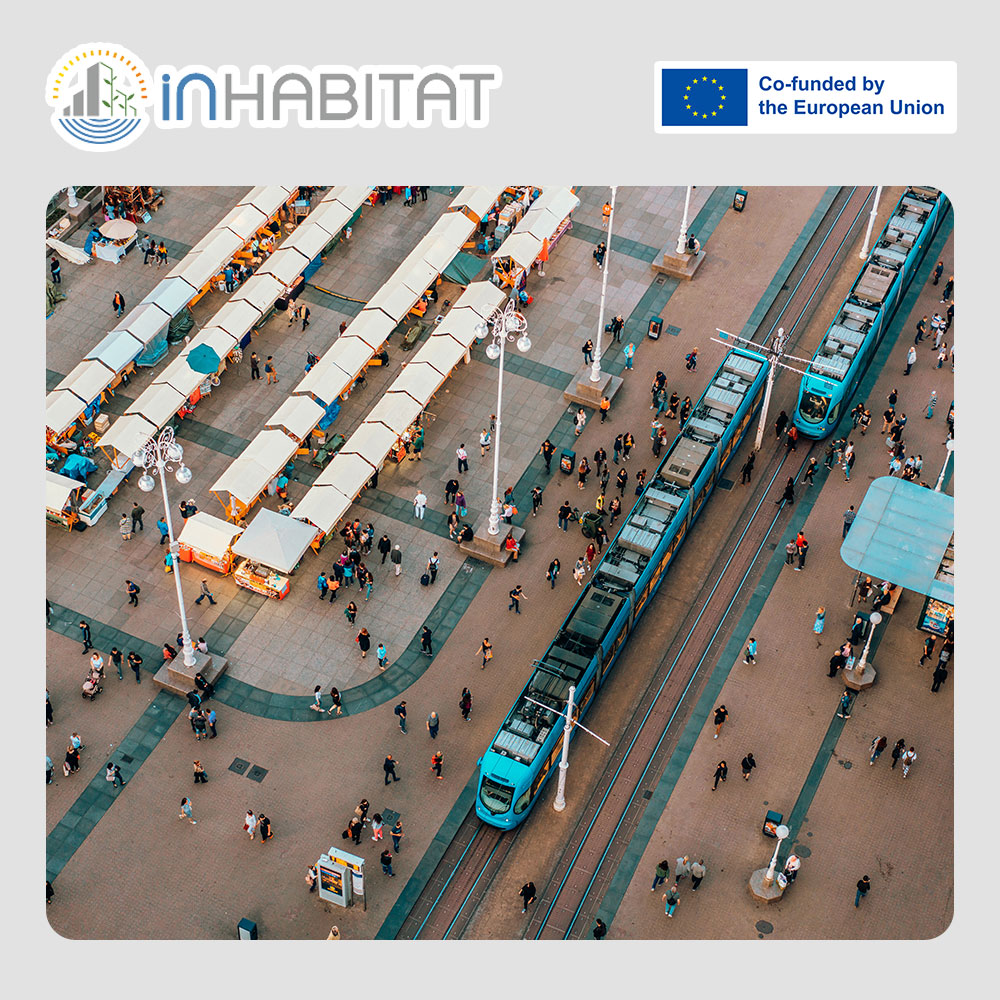
At the same time, the report shows that cars remain the dominant mode of transport in European cities. Five out of ten residents use cars on a typical day, compared to four out of ten using public transport. This illustrates how strongly urban mobility across Europe still depends on private vehicles, even in cities where public transport networks are well developed.
The report also reveals broader differences in how urban environments are experienced across Europe. For example, satisfaction with air quality is significantly higher in Northern European cities than in Southern European cities. Perceptions of noise levels, cleanliness, safety, and access to public spaces also vary depending on city size and region.
Another interesting finding is that residents in smaller and non-capital cities often report feeling safer, more satisfied with public spaces, and more positive about housing affordability. This highlights how quality of life is not determined by one single factor, but by the interaction between infrastructure, planning, environment, and social conditions.
Urban planning, therefore, shapes more than infrastructure alone. It influences how people experience movement, accessibility, environmental quality, and even social connection within cities.
Within the INHABITAT Project, these questions are explored through modules such as Urban Sustainability and Energy Efficient Cities.
The Urban Sustainability module examines how cities respond to environmental, social, and economic challenges through planning, governance, and sustainable urban development approaches. Students explore how systems such as mobility, housing, public services, and environmental management interact in practice, helping them better understand the complexity behind everyday urban life.
Meanwhile, Energy Efficient Cities focuses on the relationship between urban infrastructure, energy systems, and sustainability outcomes. This includes examining how cities can reduce environmental pressures, improve efficiency, and create more sustainable urban environments through planning and technological approaches.
Together, these modules encourage students to look beyond individual urban features and instead understand cities as interconnected systems where transport, infrastructure, environmental quality, and quality of life continuously influence one another.
Funding Agency: EACEA – European Education and Culture Executive Agency
Learn more about INHABITAT: https://www.inhabitatmsc.eu/
101108631 — INHABITAT — ERASMUS-EDU-2022-PI-ALL-INNO
Disclaimer: Funded by the European Union. Views and opinions expressed are however those of the author(s) only and do not necessarily reflect those of the European Union or the European Education and Culture Executive Agency (EACEA). Neither the European Union nor EACEA can be held responsible for them.