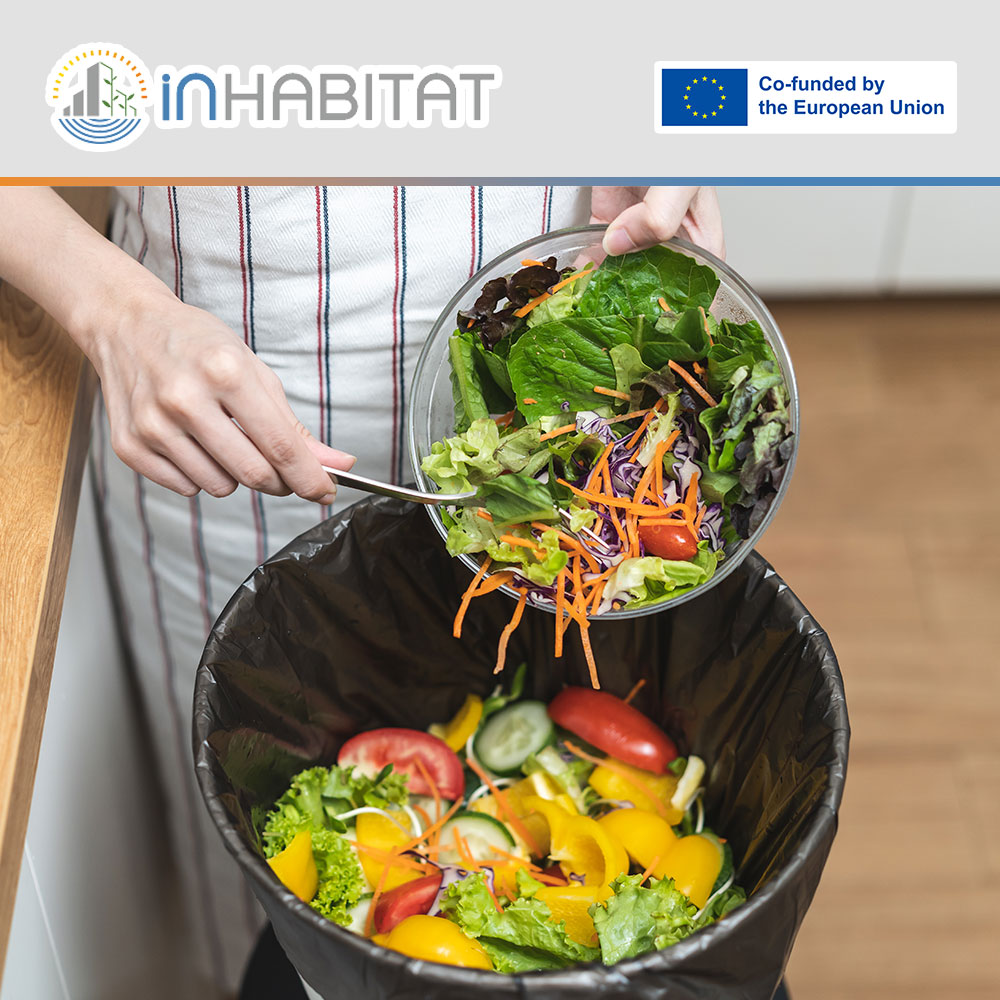
When people think about food waste, they often picture supermarket shelves being cleared of unsold products or restaurant kitchens throwing away leftovers at the end of the day.
But according to the European Commission, the biggest source of food waste in the European Union may not be where most people expect it to be.
Based on Eurostat data, households generate 53% of all food waste in the EU, making them the largest contributor by a considerable margin.
The remaining food waste is distributed across other sectors of the food supply chain:
- Food manufacturing accounts for 19% of food waste.
- Restaurants and food services account for 11%.
- Primary production contributes 10%.
- Retail and food distribution account for 8%.
These figures challenge some common assumptions about where food waste occurs and suggest that the issue extends beyond supermarkets and commercial kitchens.
The European Commission also notes that food waste is influenced by a range of everyday habits and circumstances. Factors such as purchasing patterns, confusion around date labels, lack of time, and limited awareness of how small actions accumulate can all contribute to food being discarded unnecessarily.
This does not mean that households are solely responsible for addressing the problem. Food waste occurs throughout the food supply chain, and each stage presents its own challenges and opportunities for prevention. However, the statistics highlight how millions of individual decisions made at home can collectively have a significant impact.
Understanding where food waste occurs is an important first step in developing effective responses. If assumptions about the problem do not match the evidence, efforts to reduce waste may overlook some of the areas where the greatest improvements could be made.
The European Commission identifies food waste prevention as a key component of broader efforts to improve resource efficiency and move towards more sustainable food systems. Looking more closely at how food is purchased, used, stored, and discarded can therefore contribute to reducing environmental impacts while making better use of available resources.
Within the INHABITAT Project, students examine these issues through the Waste Treatment module. The module explores different waste streams and approaches to waste management, while introducing principles related to prevention, resource efficiency, and circular economy thinking. By understanding how waste is generated and managed across different contexts, students gain insight into the complexities involved in designing more sustainable systems.
The statistics on food waste serve as a reminder that environmental challenges are often shaped by both large-scale systems and everyday practices. Sometimes, the most surprising findings encourage us to reconsider where change can begin.
Source: European Commission – About Food Waste
Funding Agency: EACEA – European Education and Culture Executive Agency
Learn more about INHABITAT: https://www.inhabitatmsc.eu/
101108631 — INHABITAT — ERASMUS-EDU-2022-PI-ALL-INNO
Disclaimer: Funded by the European Union. Views and opinions expressed are however those of the author(s) only and do not necessarily reflect those of the European Union or the European Education and Culture Executive Agency (EACEA). Neither the European Union nor EACEA can be held responsible for them.