
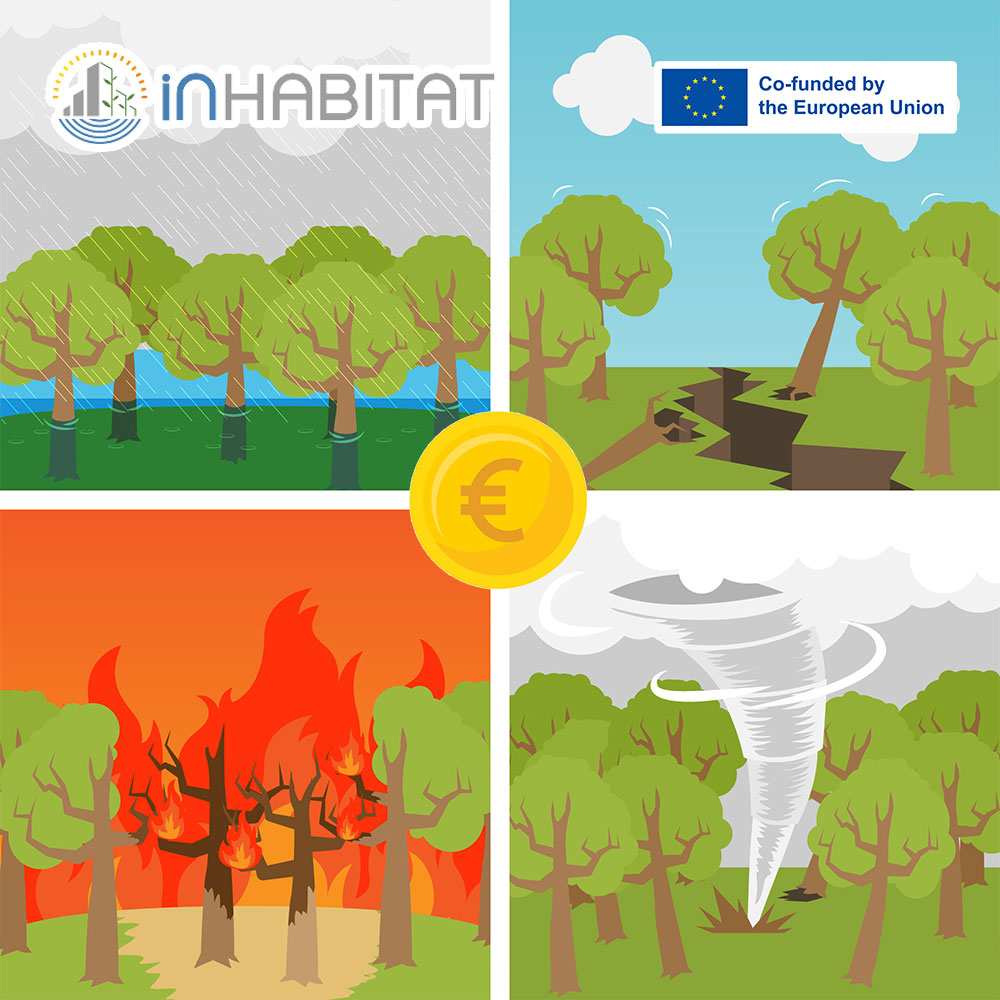
If you had to guess which natural hazard causes the greatest economic losses in Europe, what would your answer be?
Many people would probably think of earthquakes or wildfires. These events often dominate headlines because of their immediate and visible impacts.
However, according to the European Commission, floods are the most common and the most costly natural disasters in Europe.
The scale of their impact becomes even clearer when looking at data from the European Environment Agency (EEA). The Agency estimates that weather- and climate-related extreme events caused approximately €822 billion in economic losses across the European Union between 1980 and 2024. Of those losses, floods accounted for almost half (47%), making them the single largest contributor to economic damage among weather- and climate-related hazards.
These figures demonstrate that floods are not isolated events affecting only a few regions. They represent one of Europe’s most significant long-term environmental and economic challenges.
Although heavy rainfall is often the immediate cause of flooding, the extent of damage is influenced by many other factors. How land is used, how cities expand, the amount of impermeable surfaces, the capacity of drainage systems, and the resilience of infrastructure all play an important role in determining how communities are affected.
This means that reducing flood risk involves making informed planning decisions long before extreme weather takes place.
Urban planning, infrastructure design, and land management all contribute to how well cities can cope with increasingly frequent and intense weather events. Understanding where risks exist and how urban environments respond allows planners and decision-makers to identify vulnerabilities and improve resilience over time.
As climate-related hazards continue to affect different parts of Europe, building resilience is becoming an increasingly important aspect of sustainable urban development. Preparing cities for future challenges requires combining environmental knowledge with practical planning approaches that help reduce risks while supporting safe, functional, and adaptable urban environments.
Within the INHABITAT Project, students examine these issues through the Climate Change and Built Environment module.
The module explores how the built environment interacts with changing climatic conditions and how planning, design, and management decisions influence the resilience of cities and communities. Students examine environmental risks affecting urban areas while developing an understanding of how sustainable planning approaches can contribute to reducing vulnerability and improving long-term resilience.
By connecting environmental challenges with practical urban planning, the module helps students understand that resilient cities are shaped through informed decisions made long beforehand.
Sources:
- European Commission – Floods
- European Environment Agency – Economic losses from weather- and climate-related extremes in Europe
Funding Agency: EACEA – European Education and Culture Executive Agency
Learn more about INHABITAT: https://www.inhabitatmsc.eu/
101108631 — INHABITAT — ERASMUS-EDU-2022-PI-ALL-INNO
Disclaimer: Funded by the European Union. Views and opinions expressed are however those of the author(s) only and do not necessarily reflect those of the European Union or the European Education and Culture Executive Agency (EACEA). Neither the European Union nor EACEA can be held responsible for them.