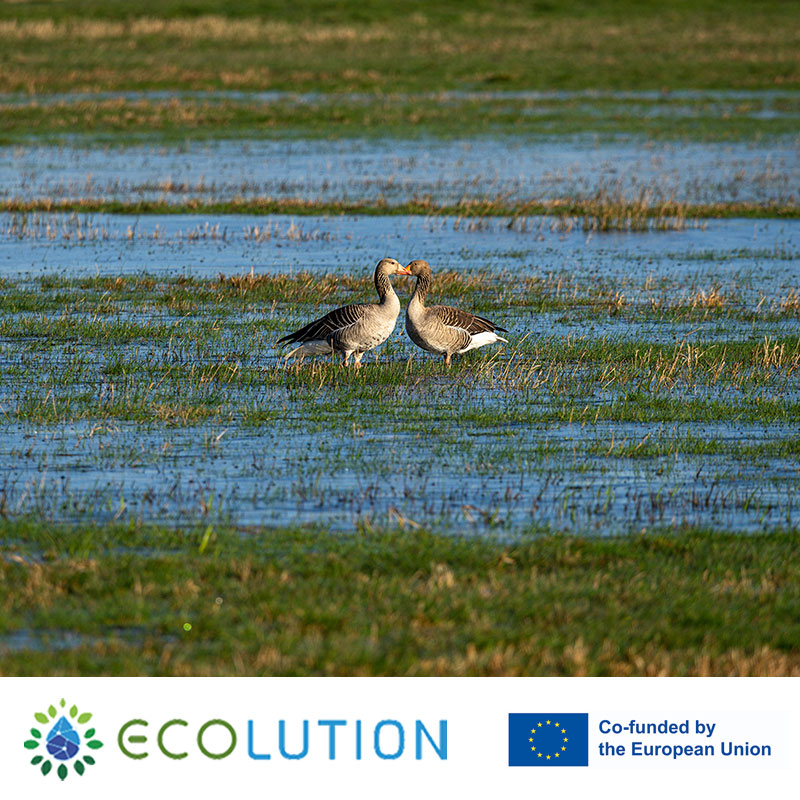
Wetlands are among the most important environmental systems in Europe. They support biodiversity, regulate water systems, contribute to water purification, and play a role in flood prevention. Wetlands also store large amounts of carbon, making them increasingly relevant in discussions around climate adaptation and environmental resilience.
Despite their importance, wetlands are also among the most vulnerable ecosystems. Changes in land use, urban development, pollution, and water management practices have contributed to the degradation of wetland environments across many regions.
Because of this, wetland conservation and restoration continue to be important areas of environmental management throughout Europe.
Wetlands include a wide range of ecosystems such as marshes, peatlands, floodplains, lagoons, and coastal wetlands. Although these environments differ in structure and location, they all share one common characteristic: the presence of water as a defining element of the ecosystem.
This connection with water systems is one of the reasons wetlands are environmentally significant.
Wetlands help regulate the movement and storage of water across landscapes. During periods of heavy rainfall, they can absorb and retain water, reducing flood risks in surrounding areas. In drier periods, they can support water retention and contribute to the stability of local ecosystems.
They also contribute to water quality. Wetland vegetation and soils can help filter pollutants and trap sediments before they move into rivers, lakes, or coastal systems.
Biodiversity is another major aspect of wetland ecosystems. Many species depend on wetlands for breeding, feeding, and migration. As a result, the condition of wetland systems can have broader impacts on surrounding ecological networks.
In addition to these environmental functions, wetlands are increasingly discussed in relation to climate adaptation. Peatlands and other wetland systems can store significant amounts of carbon, while healthy wetlands may also help reduce some of the impacts associated with extreme weather events.
Across Europe, conservation and restoration initiatives continue to focus on protecting these systems.
The European Commission recently highlighted a large-scale wetland restoration initiative in Spain through the LIFE Programme, aiming to restore more than 26,000 hectares of wetlands.
Source: Restoring wetlands with LIFE Programme’s biggest project so far
The project focuses on improving wetland ecosystems across multiple regions and reflects broader efforts related to biodiversity protection, water management, and ecosystem restoration.
Projects such as these demonstrate the growing recognition of wetlands as systems that require long-term management and protection.
Conservation work in wetlands often involves balancing environmental, social, and economic considerations. Restoration may include improving water flow, protecting habitats, monitoring biodiversity, or reducing environmental pressures caused by human activity.
Because these systems are interconnected, wetland management also requires interdisciplinary knowledge. Understanding ecological processes, water systems, environmental policy, and conservation practices all play a role in how wetlands are managed effectively.
Within the ECOLUTION Project, the course Wetlands Conservation and Management (1S5) focuses on these environmental and management dimensions.
The course introduces learners to wetland ecosystems, biodiversity, conservation practices, and environmental management approaches related to wetland systems. It also addresses the role wetlands play within broader environmental and sustainability contexts.
By combining ecological understanding with applied management perspectives, the course supports the development of knowledge relevant to environmental conservation and sustainability-related fields.
As environmental pressures continue to affect ecosystems across Europe, wetlands remain an important part of discussions around biodiversity, resilience, and long-term environmental management.
Funding Agency: EACEA – European Education and Culture Executive Agency
Learn more about ECOLUTION: https://www.ecolutionmsc.eu/
101140050 — ECOLUTION — ERASMUS-EDU-2023-PI-ALL-INNO
Disclaimer: Funded by the European Union. Views and opinions expressed are however those of the author(s) only and do not necessarily reflect those of the European Union or the European Education and Culture Executive Agency (EACEA). Neither the European Union nor EACEA can be held responsible for them.