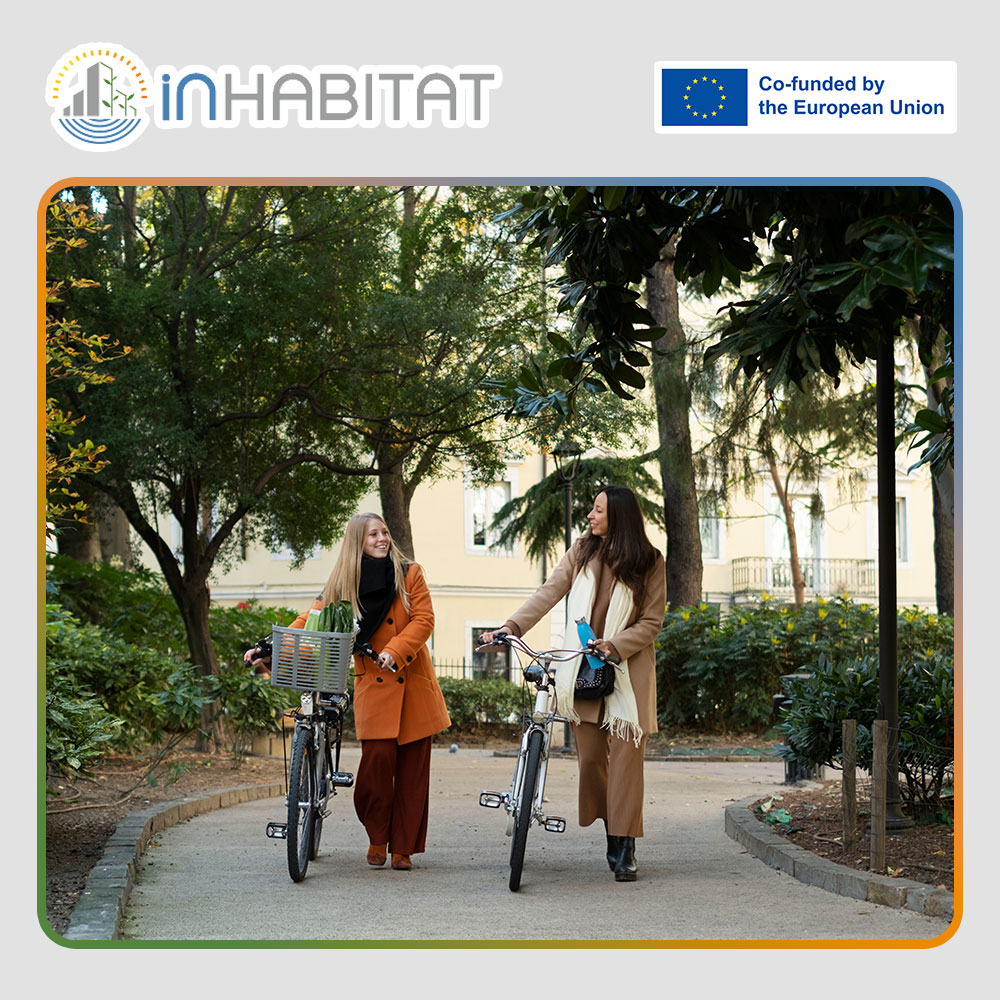
When discussions around cities focus on sustainability, attention often goes to infrastructure, transport systems, or energy efficiency. While these areas are important, everyday urban experience is also shaped by something more immediate: access to public spaces, parks, walkability, and the overall quality of the environment people move through every day.
The European Commission’s Quality of Life in European Cities 2023 report report highlights how strongly these factors connect to people’s perception of urban life. Based on more than 70,000 interviews across 83 European cities, the report explores how residents experience different aspects of city living, including mobility, public spaces, safety, environmental quality, and wellbeing.
One particularly interesting finding concerns green spaces. According to the report, the more access people have to green spaces, the more satisfied they tend to be with them. While this may sound intuitive, it highlights something important about urban planning: green areas influence how people experience urban environments on a daily basis.
Parks, public squares, pedestrian areas, and accessible outdoor spaces affect much more than appearance. They shape opportunities for movement, social interaction, rest, and everyday routines. In densely built urban areas, access to these spaces can significantly affect how comfortable and connected daily life feels.
The report also points to broader links between urban environments and wellbeing. Around 13% of people in European cities reported feeling lonely most of the time during the month before the survey. Although loneliness is influenced by many social and personal factors, the way cities are designed can still play an important role in how easily people interact with their surroundings and communities.
Public spaces are part of this equation. The report shows that residents in non-capital cities tend to be more satisfied with their public spaces compared to those living in capital cities. Smaller cities are also often perceived as cleaner, less noisy, and safer. These findings reinforce the idea that quality of life is closely connected to how urban environments are organized and experienced at the human scale.
Environmental quality also varies significantly across Europe. The report highlights noticeable differences in satisfaction with air quality and noise levels between Northern and Southern European cities. This shows how environmental conditions become part of everyday urban experience, shaping not only physical surroundings but also perceptions of comfort and wellbeing.
These questions are increasingly relevant as European cities continue to grow and adapt to environmental, demographic, and social challenges. Urban planning today is not only about accommodating growth, but also about creating environments that support quality of life in practical and meaningful ways.
Within the INHABITAT Project, these themes are explored through modules such as Urban Sustainability and Energy Efficient Cities.
The Urban Sustainability module examines how environmental, social, and spatial dimensions interact within cities, helping students understand how planning decisions influence everyday urban life. Meanwhile, Energy Efficient Cities explores how infrastructure, environmental systems, and urban development strategies affect sustainability outcomes and the long-term functioning of cities.
Together, these modules encourage students to approach cities not only as physical spaces, but as living systems shaped by mobility, public spaces, environmental quality, and human experience.
Funding Agency: EACEA – European Education and Culture Executive Agency
Learn more about INHABITAT: https://www.inhabitatmsc.eu/
101108631 — INHABITAT — ERASMUS-EDU-2022-PI-ALL-INNO
Disclaimer: Funded by the European Union. Views and opinions expressed are however those of the author(s) only and do not necessarily reflect those of the European Union or the European Education and Culture Executive Agency (EACEA). Neither the European Union nor EACEA can be held responsible for them.