Beyond the Postcard: How Spain Became One of Europe’s Sharpest Creative Engines
In 1984, long before sustainable fashion had its own marketing departments, a 20-year-old in Barcelona took pairs of discarded, second-hand jeans, sliced them into irregular swatches, and stitched them back together into an oversized bomber jacket. That patchwork laid bare an attitude that defines modern Spanish creativity: taking whatever raw, chaotic material is at hand and refusing to build something polite.
For decades, outsiders reduced Spanish creative output to sunny postcards, historic monuments, and folklore. Today, that caricature is dead.
Spain has methodically built one of the most dynamic, economically robust creative ecosystems in Europe. It isn’t powered by a single centralised capital dictating taste, but by distinct regional hubs that treat design, cinematography, and digital code as serious industrial disciplines.
The Anatomy of a Decentralised Creative Engine
1. Barcelona: Nonconformity as Industrial Strategy
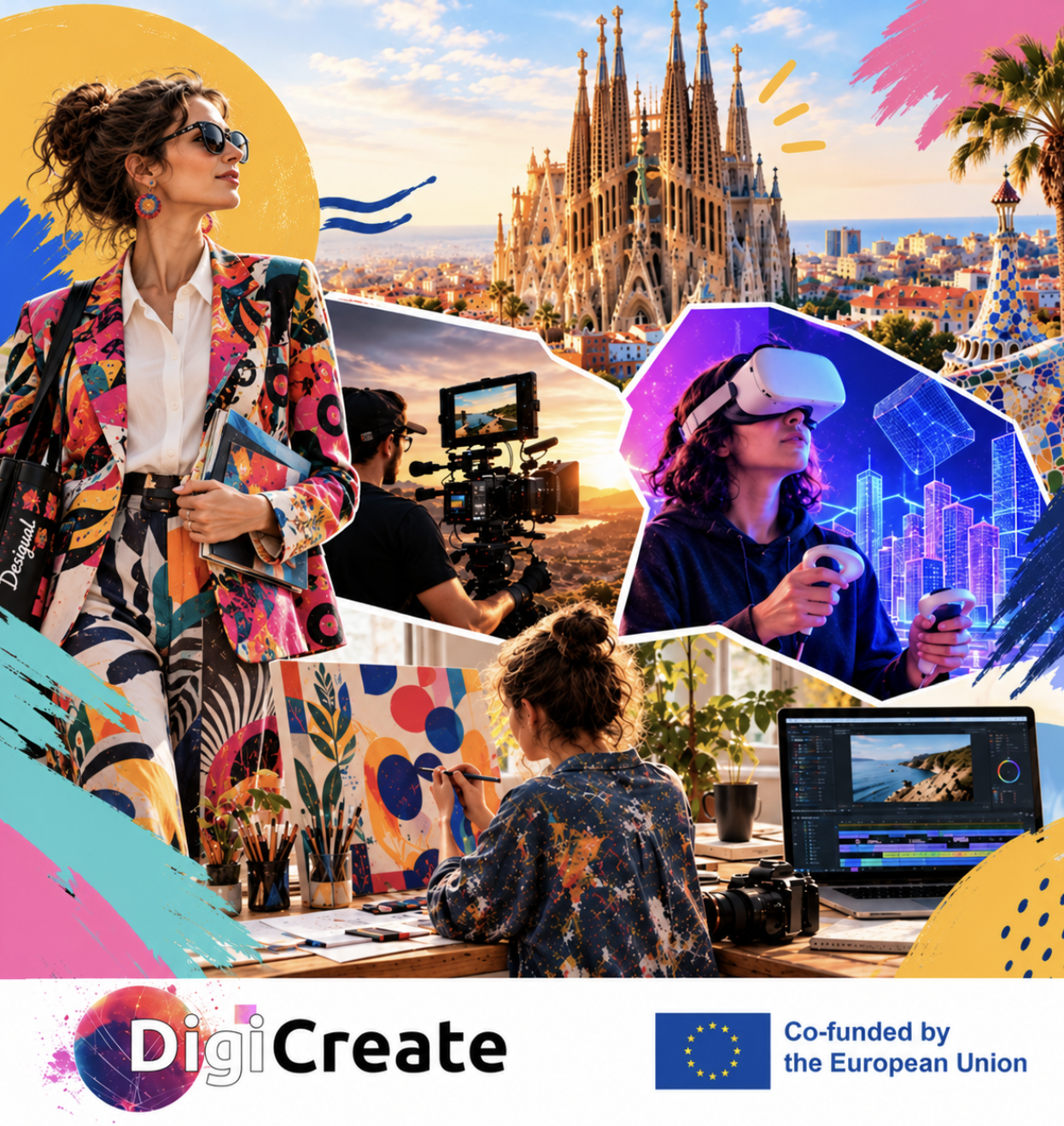
Barcelona has always treated aesthetic rebellion as commercial export. From the public interventions of modernism to street-level textile ateliers in Poblenou and El Born, the Catalan capital refuses conventional corporate restraint. Brands like Desigual turned patchwork and deliberate clash into global signatures, while independent graphic design studios, typographers, and digital agencies across the city set visual trends adopted worldwide.
2. Bilbao & Valencia: Design Beyond Decoration (UNESCO Creative Cities)
Design in Spain is rarely just about making objects look sleek:
- Bilbao demonstrated to the world how architectural boldness and design thinking could rescue a decaying post-industrial riverfront and reinvent an entire metropolitan identity.
- Valencia, celebrated as a UNESCO Creative City of Design and World Design Capital, anchored its creative strength in Mediterranean craftsmanship, pioneering human-centred furniture design, and circular manufacturing.
In both cities, design is treated not as a cosmetic layer applied at the end, but as foundational infrastructure.
3. Madrid: Europe’s Preferred Production Studio
Step onto the streets of Madrid on any given morning, and you will dodge film crews. Supported by the proactive coordination of the Madrid Film Office, the capital has evolved into one of Europe’s primary production bases for major international feature films and streaming networks. Historic Habsburg alleyways sit minutes away from cutting-edge virtual production soundstages, post-production audio suites, and specialised visual effects houses.
4. The Digital Frontier: A €2.3 Billion Gaming Industry
Nowhere is this synthesis of art and technology clearer than in Spain’s video game sector.
Surpassing €2.3 billion in annual turnover with over 23 million active players, Spain is not merely consuming interactive media—it is defining its aesthetic language. Spanish independent studios have earned global prestige by rejecting generic tropes and embedding distinct cultural heritage straight into modern game engines:
- Independent masterpieces have drawn worldwide acclaim by translating delicate, hand-painted Mediterranean watercolours into interactive platformers.
- Other studios have mined regional baroque architecture, folklore, and Seville’s haunting Holy Week iconography to build gothic visual spectacles.
Digital worlds in Spain do not mimic Silicon Valley; they reflect authentic local voice translated through rigorous software engineering.
Why This Matters for DigiCreate
Understanding creative industries as real economic engines is central to the mission of DigiCreate.
Connecting youth across Europe and the Western Balkans through virtual exchanges, DigiCreate challenges the outdated belief that pursuing arts and design is an economic dead end. When emerging creators see how physical textile traditions feed digital 3D fashion, or how architectural training leads directly to environment design in Unreal Engine, the horizon expands.
Creativity is no longer confined to the canvas. In modern Spain, and across Europe, it is the bridge connecting cultural heritage, digital technology, and high-value employment.
Sources & Further Reading
- UNESCO Creative Cities Network (Bilbao & Valencia – Cities of Design): https://www.unesco.org/en/creative-cities
- Madrid Film Office (Audiovisual Production Hub): https://madridfilmoffice.com/
- Asociación Española de Videojuegos (AEVI Annual Report): https://www.aevi.org.es/
Official Website of the Erasmus+ Virtual Exchange Project DigiCreate: https://digicreate-empower.eu/
Consortium Partners:
- Youth Power Germany EV (YP-DE) (Germany)
- Evolutionary Archetypes Consulting SL (EAC) (Spain)
- Cooperativa Para O Desenvolvimento E Coesão Social, CRL (Contextos) (Portugal)
- Univerzitet Union Nikola Tesla (UniTesla) (Serbia)
- Udruzenje Okret (SPIN) (Bosnia and Herzegovina)
- Nevladina Organizacija GLAS (NVO GLAS) (Montenegro)
- Javna Ustanova Univerzitet Crne Gore Podgorica (UoM) (Montenegro)
- Fakultet Za Poslovnu Ekonomiju I Pravo Bar (FPEP Bar) (Montenegro)
Funding Agency: EACEA – European Education and Culture Executive Agency
101193474 — DigiCreate — ERASMUS-EDU-2024-VIRT-EXCH
Disclaimer: Funded by the European Union. Views and opinions expressed are however those of the author(s) only and do not necessarily reflect those of the European Union or the European Education and Culture Executive Agency (EACEA). Neither the European Union nor EACEA can be held responsible for them.