Designing for the Extreme: An Overview of the DEXTER Space Architecture Curriculum
What if the key to building resilient, sustainable cities on Earth is actually learning how to survive on the Moon or Mars? Space architecture is no longer a speculative concept reserved for science fiction writers and academic theorists. It has become the ultimate testing ground for human innovation, forcing engineers and designers to rethink everything they know about resource management, structural integrity, and human psychology.
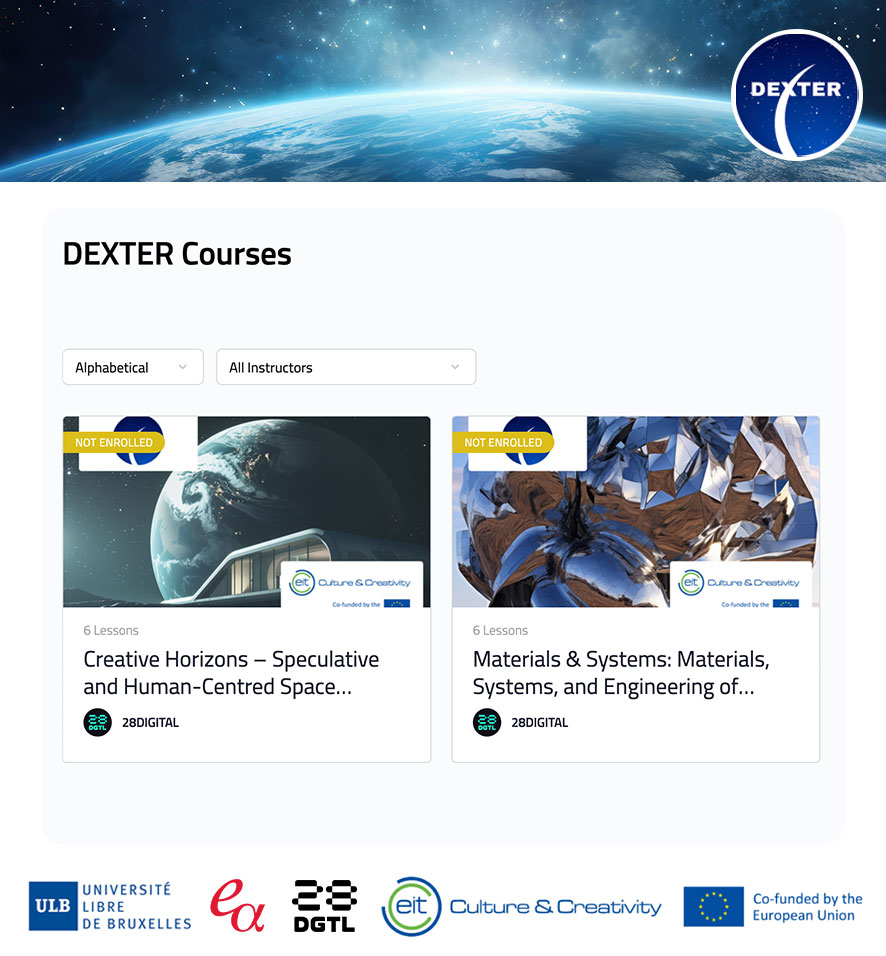
To meet this complex challenge, the project consortium led by Centre for Research and Engineering in Space Technologies (CREST) has launched the DEXTER Space Architecture Master Class. This groundbreaking 120-hour interdisciplinary curriculum is specifically designed to bridge the gap between aerospace engineering, materials science, environmental systems, and human-centred design.
An Integrated Design Pathway
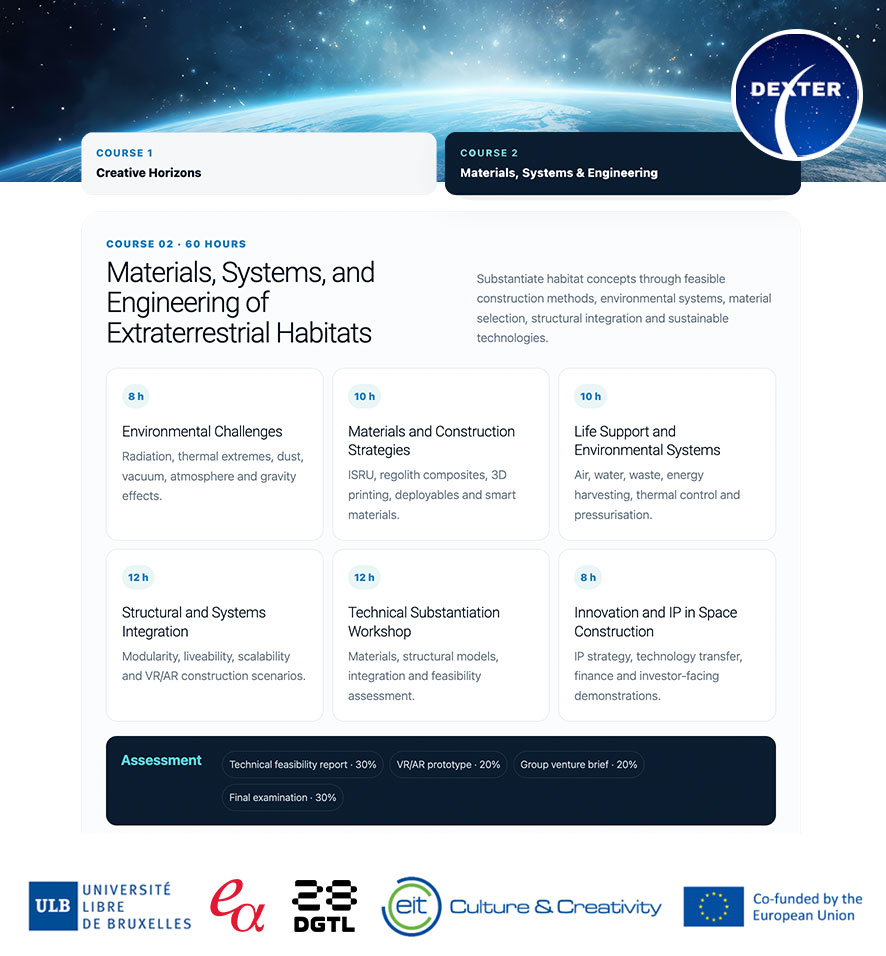
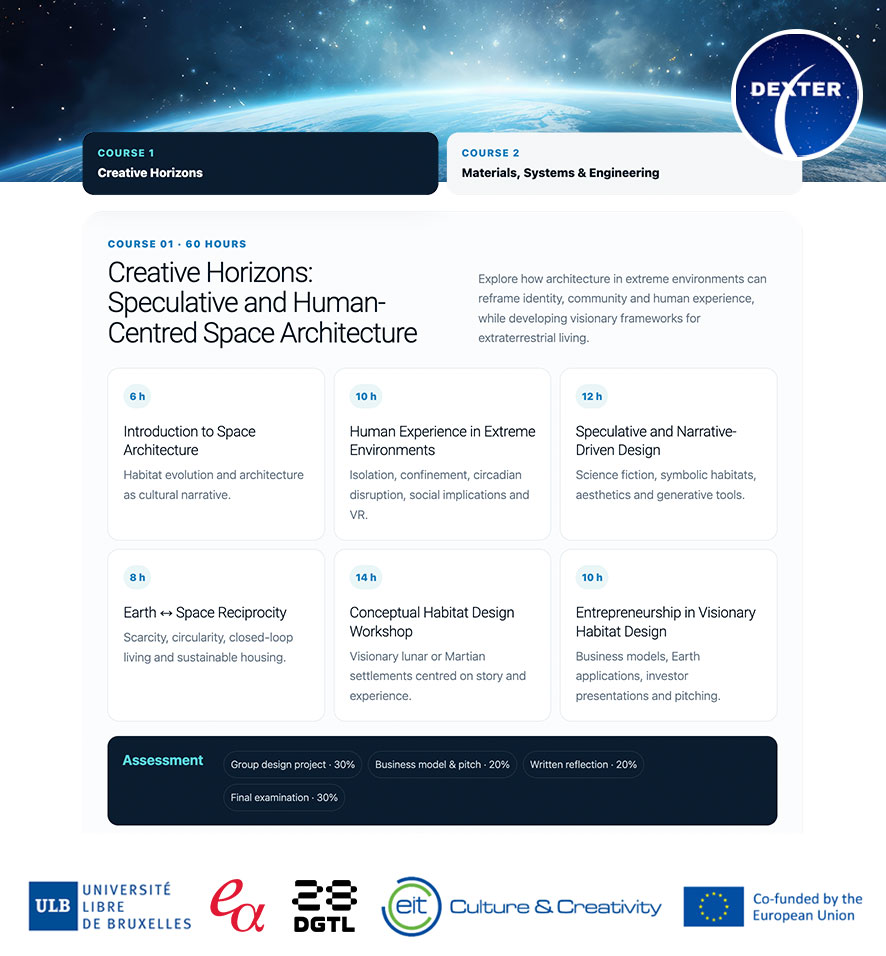
Designing habitats for extreme environments requires an entirely new, systems-level approach. Rather than isolating engineering from aesthetics, the DEXTER programme unites them through one integrated design pathway. The curriculum is meticulously structured across two complementary courses and 12 distinct teaching sections, taking participants on a journey from visionary concept generation to rigorous technical substantiation.
Participants begin by framing the complex environmental and cultural constraints of off-world living. They then move into engineering the core systems required for survival, selecting appropriate life support mechanisms, energy architectures, and radiation shielding. Finally, the programme focuses on validating the feasibility of these designs using digital models and virtual reality prototypes, ensuring that every speculative idea is anchored in hard science.
From Space to Sustainable Terrestrial Infrastructure
The true value of this curriculum extends far beyond extraterrestrial settlements. The extreme constraints of space demand the development of closed-loop water and waste systems, modular construction techniques, and highly efficient renewable energy grids. These exact same design logics are urgently needed to develop resilient housing, off-grid infrastructure, and rapid emergency response systems in vulnerable environments here on Earth.
By mastering the principles of space architecture, professionals are preparing themselves for versatile careers across aerospace development, future city planning, and sustainable terrestrial construction. Over the next few weeks, we will be diving deeper into the specific content of both major courses and the individual lessons that make up this transformative educational experience.
Explore the complete curriculum and access the DEXTER digital learning platform here: https://crest.ulb.be/dexter/
European institutions & programs:
- Funding Agency: European Institute of Innovation and Technology (EIT)
- Programme: EIT Culture & Creativity
Project KAVA Code: 062600033
Co-funded by the European Union. Views and opinions expressed are however those of the
author(s) only and do not necessarily reflect those of the European Union or the EIT. Neither the European Union nor the granting authority can be held responsible for them.
EIT Culture & Creativity is supported by the European Institute of Innovation and Technology (EIT), a body of the European Union.