A new academic year is approaching for the ACHIEVE community.
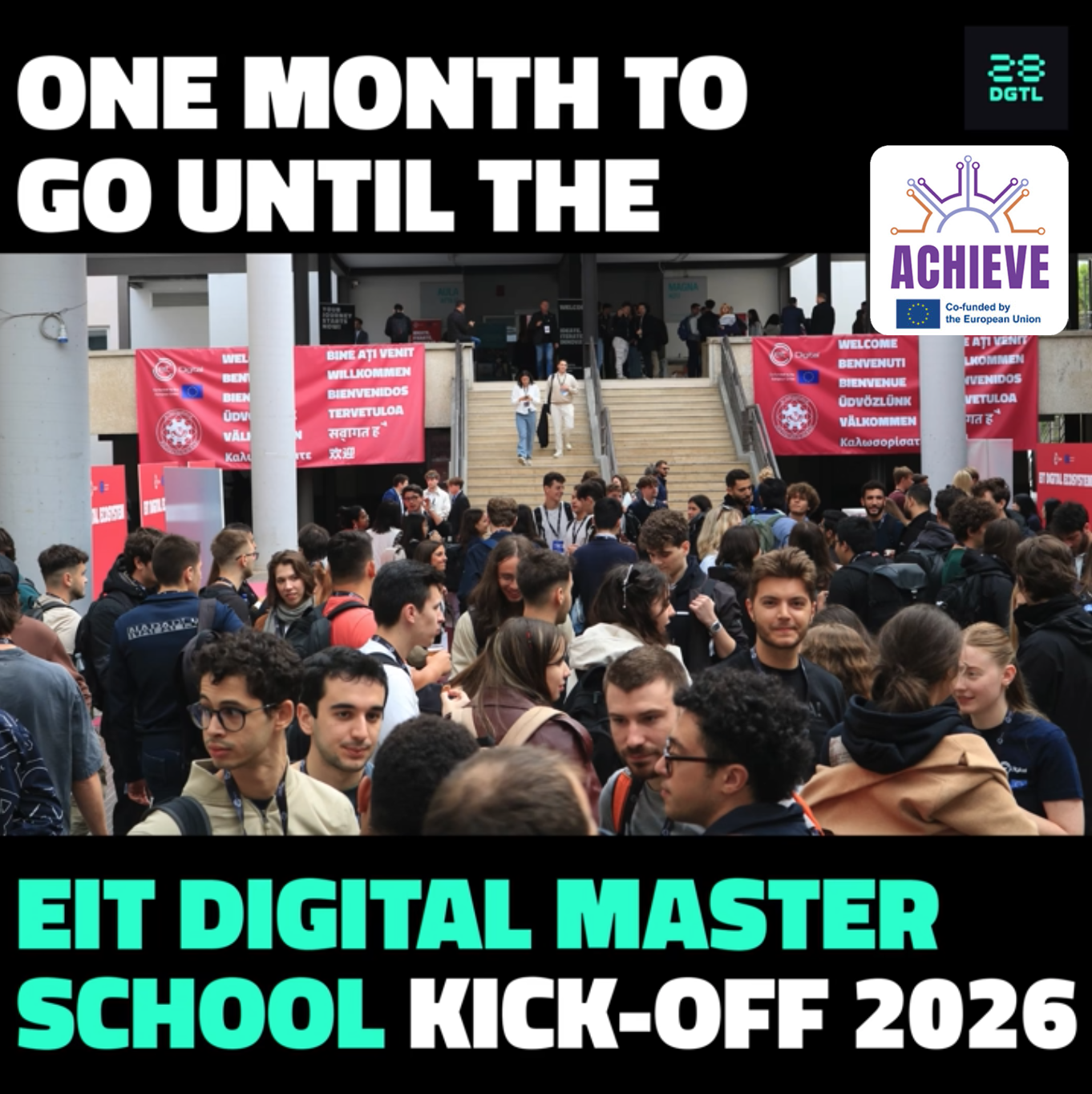
From 8-10 October 2026, the new cohort will come together at the Tallinn University of Technology for the EIT Digital Master School Kick-off in Tallinn, Estonia.
The Kick-off marks the start of the academic year for newly enrolled EIT Digital Master School students. It allows new students to get to know one another and introduces them to the Innovation and Entrepreneurship component of its double-degree Master’s programmes.
For the new ACHIEVE cohort, the event will also be an opportunity to meet each other and get to know the ACHIEVE community as they begin their two-year studies.
A New Cohort Begins
While the 2026 cohort prepares for the start of its studies, the 2025 cohort is moving into its specialisation year after completing its first year in Cloud and Networking and taking its first steps in Innovation and Entrepreneurship.
The Cloud and Networking Infrastructure and HPC (CNIHPC) programme is part of the EIT Digital Master School portfolio and is associated with ACHIEVE.
EIT Digital Master School students study at two different universities in two European countries as part of their education. The Master School also includes mobility opportunities such as Kick-off events and Summer Schools.
Looking Ahead to Tallinn
The upcoming Kick-off will bring the 2026 cohort together in Tallinn before they continue their studies at their respective universities.
For Evolutionary Archetypes Consulting SL and 28DIGITAL, this is an opportunity to share an important moment for the ACHIEVE community and follow the new cohort as they begin their studies.
📅 8-10 October 2026
📍 TalTech – Tallinn University of Technology, Tallinn, Estonia
Stay tuned for updates from Tallinn as the 2026 cohort gets started.
Learn more about ACHIEVE: https://28digital.eu/eu-collaborations/achieve
101190015 — ACHIEVE — DIGITAL-2023-SKILLS-05
Disclaimer: Co-Funded by the European Union. Views and opinions expressed are however those of the author(s) only and do not necessarily reflect those of the European Union or HADEA. Neither the European Union nor the granting authority can be held responsible for them.