What Can You Actually Do Inside a Virtual Museum?
You have probably heard of virtual museums before. But what can you actually do inside one?
That question is at the center of work carried out by researchers and students at the University of Twente in June 2026, including students from Interaction Technology (I-Tech), Creative Technology (CreaTe), and Technical Computer Science.
Rather than focusing only on creating digital versions of museum objects or spaces, they have been looking at what happens when visitors can interact with what they see and receive information in response to their actions.
Making a Virtual Museum Interactive
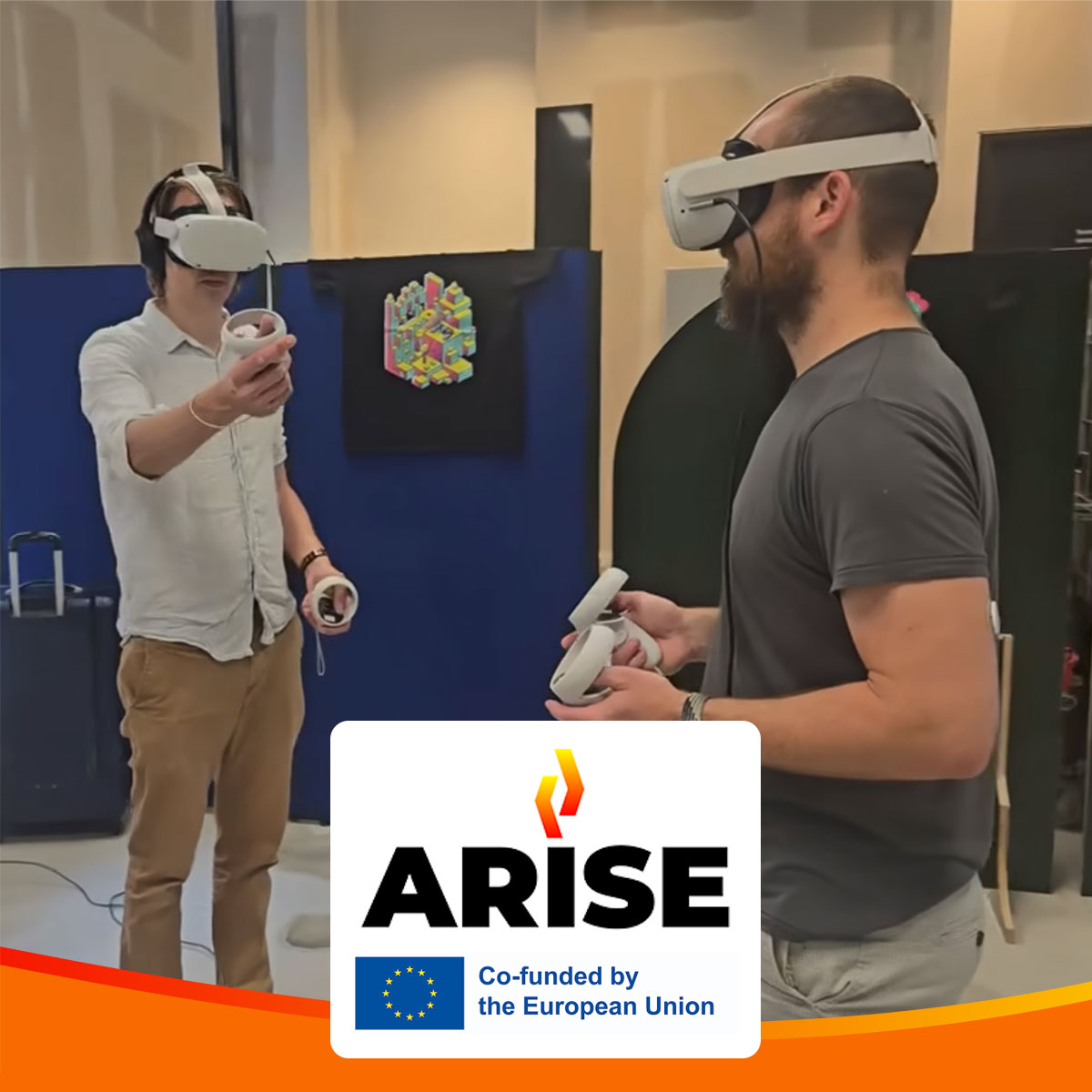
Some of this work was presented at the Playlab Festival in Enschede on 26 June 2026.
The demonstrations explored different forms of interaction and personalized information. In one example, visitors could grab items from a painting and learn about their significance. In another, people could enter VR together and solve riddles while learning about historical perspectives.
These examples give a much clearer idea of what “interactive” can mean in a virtual museum. Instead of simply viewing a digital object, visitors can take part in the experience, make choices, and engage with information as they explore.
This type of experimentation also fits within the wider work taking place at the University of Twente. Its Interaction Lab gives I-Tech and CreaTe students access to interactive technologies, including VR, and provides a space for students and researchers to explore new forms of interaction.
Connecting Research and XR Education
The Playlab Festival was also an opportunity to introduce students and creative companies to the double-degree program connected to ARISE.
The project focuses on developing skills in areas including Extended Reality and Human–Computer Interaction. The work presented in Enschede offers a concrete example of the questions future XR developers and researchers may encounter:
- How should people interact with immersive environments?
- How can information respond to the individual user?
- And how can virtual experiences be designed with inclusion in mind?
Interactive heritage is one area where these questions can be explored further as students develop the technical and interdisciplinary skills needed to work with XR.
Watch the video:
Evolutionary Archetypes Consulting SL and 28DIGITAL are partners in ARISE, working alongside the wider consortium on the project.
The University of Twente demonstrations offer an interesting glimpse of what the next generation of virtual museum visits could involve, not just seeing a collection on a screen or through a headset, but interacting with it.
Learn more about ARISE: https://28digital.eu/eu-collaborations/arise
Project Number: 101225600 — ARISE — DIGITAL-2024-ADVANCED-DIGITAL-07-KEYCAPACITY
Co-funded by the European Union. Views and opinions expressed are however those of the author(s) only and do not necessarily reflect those of the European Union or HADEA. Neither the European Union nor the granting authority can be held responsible for them.