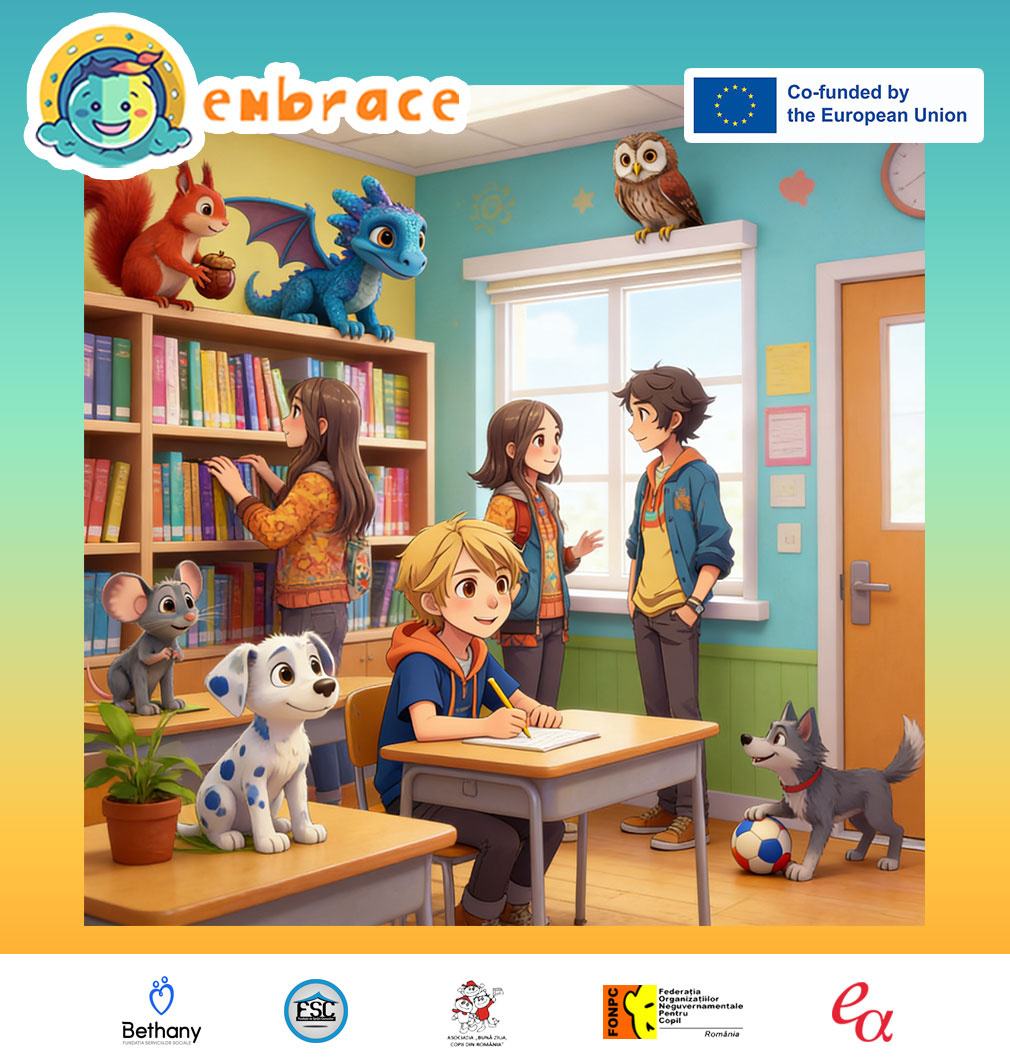
Promoting the “Whole-School Approach”: Why Mental Health Belongs in the Classroom Ecosystem
As the EMBRACE project enters its final month, we find ourselves reflecting deeply on the core mission that has driven our work: supporting true, sustainable well-being within educational institutions.
Schools are far more than just buildings where academic lessons take place. They are the primary environments where young people spend their most critical developmental years. Because of this, addressing the mental and emotional health of both pupils and educators became a fundamental necessity for educational success.
The Reality of Today’s Classrooms
The European Commission’s data highlights a pressing reality for modern education. Evidence from the World Health Organisation reveals that today’s adolescents face poorer mental health outcomes than previous generations. Furthermore, data from the Programme for International Student Assessment (PISA) indicates a worrying rise in bullying alongside a decline in basic student skills (Source: Eurydice – EACEA).
It is not just students who are struggling. Educators are facing an increase in chronic stress and burnout due to evolving classroom challenges and a lack of adequate resources, training, and systemic support. When teacher well-being drops, it directly impacts teaching practices and increases the likelihood of educators leaving the profession entirely.
Moving Beyond the Surface: The Whole-School Approach
To counter these challenges, the European Commission emphasizes a “whole-school approach”. This strategy recognizes that a student does not exist in a vacuum. Instead, schools, families, and local communities are viewed as an interconnected ecosystem.
A successful well-being strategy requires collaboration across multiple levels simultaneously:
- Developing core social and emotional competencies in learners.
- Enhancing the capacity of both pupils and educators to make healthy, autonomous choices.
- Building active cooperation between schools, health agencies, municipalities, and youth organisations to tackle complex issues like trauma, socioeconomic challenges, and cyberbullying.
The EMBRACE Legacy: Mental Health as a Core Subject
Throughout the lifetime of the EMBRACE project, our goal has been to actively weave mental health into this very ecosystem. We believe that emotional intelligence, self-esteem, and coping mechanisms shouldn’t be treated as crisis-intervention tools used only when something goes wrong. Instead, mental health should be taught systematically, ensuring that emotional literacy becomes a foundational pillar of daily learning.
By equipping classrooms with resources that foster positive relationships, autonomy, and a sense of belonging, we can create environments where students feel safe, valued, and respected.
We are nearing the end of this project chapter, but the advocacy does not stop here. The tools and frameworks built during EMBRACE will continue to support the transition toward schools that cultivate human potential just as much as academic achievement.
To read more about the European Commission’s framework and current initiatives for educational well-being, visit the official European Education Area portal.
Funding Agency: EACEA – European Education and Culture Executive Agency
Learn more about EMBRACE: embrace-future.eu
Project: 101190161 — EMBRACE — CERV-2024-CHILD
Disclaimer: Funded by the European Union. Views and opinions expressed are however those of the author(s) only and do not necessarily reflect those of the European Union or the European Education and Culture Executive Agency (EACEA). Neither the European Union nor EACEA can be held responsible for them.