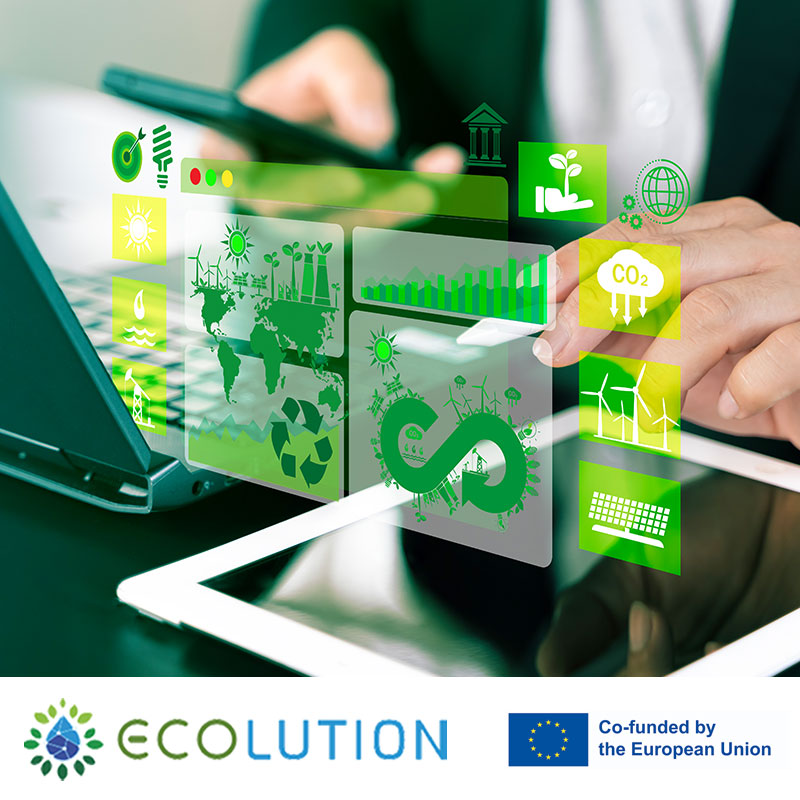
Environmental data supports work across areas such as resource management, environmental protection, and long-term planning. It provides the basis for understanding environmental systems and assessing how they change over time.
⇒ This data is collected from a range of sources, including monitoring systems, sensors, satellite observations, and field-based measurements.
⇒ It can include information on air quality, water systems, land use, and biodiversity. As a result, environmental datasets are often large, complex, and varied in format.
Before this data can be used, it needs to be processed.
Processing involves organizing and structuring datasets so that they can be accessed and interpreted consistently. This may include standardizing formats, aligning data from different sources, and checking for errors or inconsistencies. Without these steps, it is difficult to compare or combine datasets in a reliable way.
Once data has been structured, it can be analyzed. This allows patterns to be identified and relationships between variables to be explored. For example, combining data from different monitoring systems can help identify how environmental conditions change across regions or over time. It can also support the identification of trends that may not be visible in individual datasets.
The importance of making environmental data accessible and usable is reflected in the European Commission’s work on green data.
Source: European Commission – Green Data
This work focuses on improving how environmental data is shared and used, with the aim of supporting analysis and decision-making. It highlights the need for data to be not only available, but also usable in practice.
Processed data plays a key role in a wide range of activities. It supports environmental assessments, contributes to planning processes, and provides a basis for policy development. It is also used in research contexts, where consistent and reliable data is necessary for drawing conclusions.
As environmental challenges become more complex, the role of data continues to expand. Working with environmental data increasingly requires both technical skills and an understanding of how information is applied in context. This includes the ability to manage datasets, interpret results, and communicate findings in a way that supports decision-making.
Within the ECOLUTION Project, the course Environmental Data Processing (1S3) focuses on how environmental data is handled and applied.
The course introduces learners to methods for working with environmental datasets, including organizing data, analyzing results, and interpreting findings. It also addresses how processed data is used in practical contexts, supporting work across environmental and sustainability-related fields.
By combining these elements, the course supports the development of skills that are relevant across both environmental and digital domains.
As the use of environmental data continues to grow, the ability to process and apply this information remains an important part of understanding and responding to environmental challenges.
Funding Agency: EACEA – European Education and Culture Executive Agency
Learn more about ECOLUTION: https://www.ecolutionmsc.eu/
101140050 — ECOLUTION — ERASMUS-EDU-2023-PI-ALL-INNO
Disclaimer: Funded by the European Union. Views and opinions expressed are however those of the author(s) only and do not necessarily reflect those of the European Union or the European Education and Culture Executive Agency (EACEA). Neither the European Union nor EACEA can be held responsible for them.