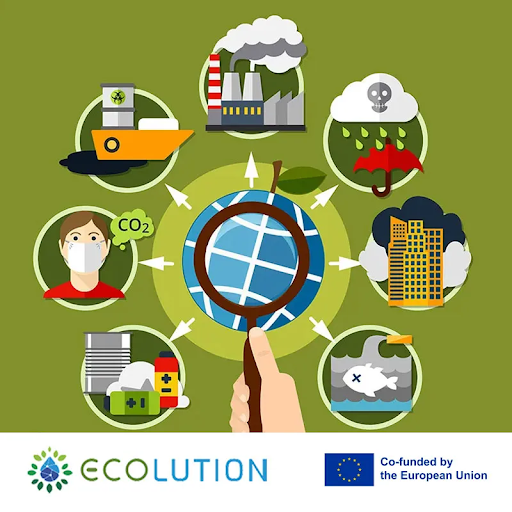
How can we protect species, ecosystems, and habitats when there are so many interacting threats – from pollution to invasive species to climate change?
By mastering environmental risk assessment, students gain the tools to identify, evaluate, and manage those threats so nature can recover and thrive.
⇒ Tools like the WWF Biodiversity Risk Filter help organizations assess nature-related risks and prioritise action on habitats and species most at risk.
📚 In ECOLUTION Project’s Environmental Risk Assessment I (1S3) course, students:
• Learn the historical, legal, and biological foundations of nature conservation-including major frameworks like the Habitats Directive and the EU Birds Directive
• Grow familiar with key conservation parameters (e.g., habitat condition, species richness, ecosystem services) and how to monitor them
• Explore methods and strategies for assessing risks to species, ecosystems, and protected areas (forests, wetlands, non-forest habitats)
• Develop competence in applying conservation laws and policies at national and international levels (such as CITES and the EU’s Natura 2000 network)
• Work through hands-on case studies in habitat management, species protection, and conservation planning so they can contribute to real-world initiatives
In simpler terms, Students learn to see the threats, measure the risks, design responses, and then apply them in nature conservation settings.
Learn more: https://ecolution.ea.consulting/course/
101140050 — ECOLUTION — ERASMUS-EDU-2023-PI-ALL-INNO
Disclaimer: Funded by the European Union. Views and opinions expressed are however those of the author(s) only and do not necessarily reflect those of the European Union or the European Education and Culture Executive Agency (EACEA). Neither the European Union nor EACEA can be held responsible for them.