For most of us, turning on the tap is something we rarely think twice about. We expect clean and safe drinking water to be available whenever we need it, without stopping to consider everything happening behind the scenes to make that possible.
But how do cities know when something isn’t working as it should?
Modern water systems are becoming increasingly digital. Instead of relying only on routine inspections or waiting until a problem becomes visible, water utilities are now able to use connected technologies to monitor networks in real time, helping them identify issues earlier and manage resources more efficiently.
Recognising the growing importance of digital solutions, the European Commission included water digitalisation as part of its 2025 Water Resilience Strategy. Through its upcoming Digitalisation Action Plan for the water sector, the Commission promotes the use of technologies such as smart sensors, smart meters, and the Internet of Things (IoT) to improve the way Europe’s water infrastructure is managed.
According to the European Commission, smart meters can reduce water use by up to 25%, while broader digital systems can save an additional 5–8%. Leak detection technologies can further reduce water consumption by 7–14% by identifying problems before they become larger losses.
Rather than reacting only after a pipe bursts or significant amounts of water have already been lost, digital monitoring allows utilities to detect irregularities earlier, improve efficiency, and make better-informed decisions about maintenance and resource management.
The European Commission also highlights that protecting drinking water depends on effective monitoring, assessment, and enforcement based on the latest scientific evidence. As climate pressures, population growth, and ageing infrastructure continue to place greater demands on water systems, having accurate and timely information is becoming increasingly important.
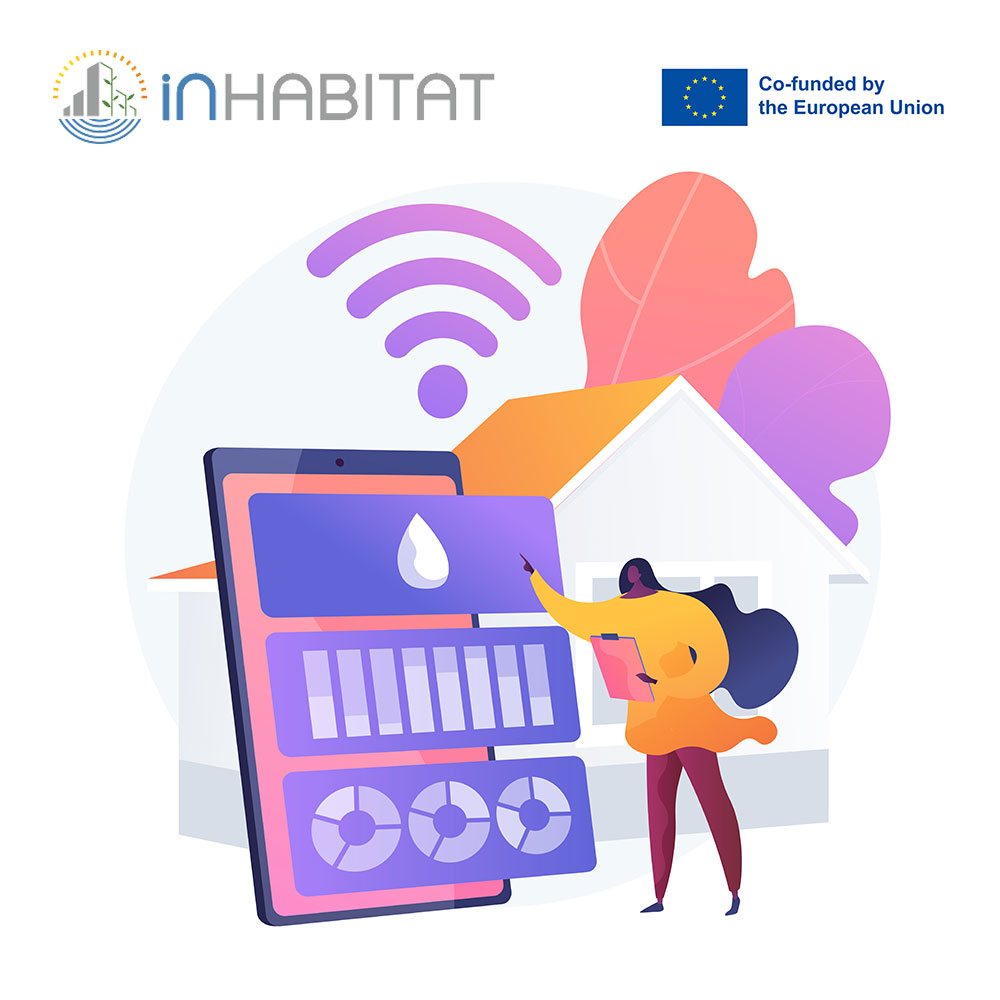
Behind many of these technologies are connected sensors and IoT networks that continuously collect information from different parts of the water system. Data is transmitted, processed, and analysed to provide operators with a clearer understanding of how infrastructure is performing and where intervention may be needed. This allows potential issues to be identified sooner while supporting more efficient management of one of Europe’s most valuable resources.
Within the INHABITAT Project, students explore these technologies through the Data Acquisition and IoT module.
The module introduces students to a range of sensing technologies used to monitor environmental conditions, including water-related parameters. Students learn how distributed sensor networks, IoT platforms, and data acquisition systems collect, transmit, and manage information from real-world environments. The course also examines how this data can be integrated into smarter urban services, supporting evidence-based decision-making and more efficient infrastructure management.
As cities become increasingly connected, understanding how data is collected, interpreted, and applied is becoming an essential skill for developing resilient and sustainable urban systems. Water is just one example of how digital technologies are quietly transforming the services many of us rely on every day.
Source: European Commission – Commission launches call for evidence on digital action plan for water sector
Funding Agency: EACEA – European Education and Culture Executive Agency
Learn more about INHABITAT: https://www.inhabitatmsc.eu/
101108631 — INHABITAT — ERASMUS-EDU-2022-PI-ALL-INNO
Disclaimer: Funded by the European Union. Views and opinions expressed are however those of the author(s) only and do not necessarily reflect those of the European Union or the European Education and Culture Executive Agency (EACEA). Neither the European Union nor EACEA can be held responsible for them.