Digital collaboration and co-design across the cultural and creative sectors can spark incredible ideas, unexpected breakthroughs, and transformative works. Bringing together different creative input from diverse sources is often the absolute foundation of renewed inspiration. However, working effectively in cross-border and digital landscapes requires more than just shared ambition; it demands structural care, open communication, and clear ethical boundaries.
Before integrating someone else’s image, audio asset, text draft, or conceptual design into a public piece of work, young creatives must learn to ask themselves three critical questions:
-
- Do I have explicit permission?
- How do I properly credit this contributor?
- What did our team collectively agree to share with the world?
Establishing explicit creative boundaries doesn’t restrict artistic expression. Instead, it protects individual creators, reduces toxic misunderstandings, and builds the baseline trust needed to sustain professional collaborations across different cultures and creative fields.
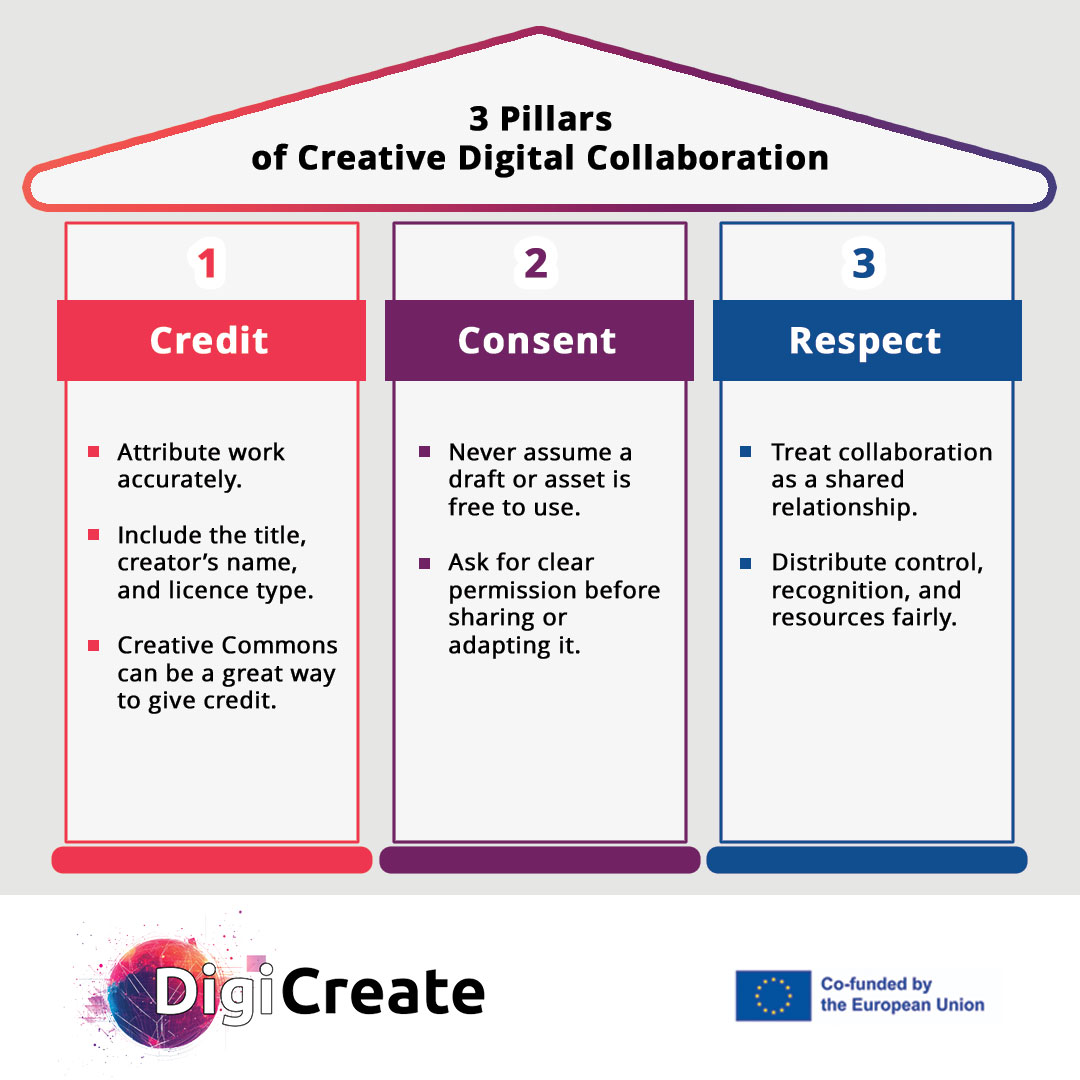
Pillar 1: Credit and the Power of Proper Attribution
When you utilise someone else’s creative or scholarly work online, giving the creator clear and visible credit is a foundational building block of professional expression. Acknowledging originality not only honours the immense work that went into an asset’s creation, but it also actively establishes your own credibility as an ethical professional within the creative industries.
When working with Creative Commons (CC) licensed materials, giving credit is also a strict legal requirement. All CC licenses include the “BY” attribution mandate. To build a reliable workflow, young creators should master a straightforward attribution formula that explicitly mentions:
- The Title of the work (hyperlinked to the original source if possible).
- The Name or handle of the creator (hyperlinked to their professional profile).
- The specific Creative Commons License type (hyperlinked directly to the official license terms).
Furthermore, citing your sources represents an incredible opportunity to boost diversity in creative networks. When you credit an asset, you amplify that creator’s voice and directly boost their market visibility. Taking the time to understand the context of the portfolios you interact with allows you to strategically align your own brand with the topics, styles, and values you want to champion.
Pillar 2: Valuing Consent and Protecting Intellectual Property
True collaboration is an ongoing, evolving relationship where both parties benefit from mutual efforts, and where control is shared equitably among participants. A healthy relationship requires honesty, reflexivity, and a deep respect for intellectual property.
Young creators must realise that obtaining consent is never a one-time box to tick. It means practising active listening and never assuming that a shared draft, sketch, or digital asset is free to be modified or publicly distributed without explicit approval. Securing unambiguous consent before publishing or adapting content shields projects from negative feelings and structural failures, laying the groundwork for long-term, sustainable partnerships.
Pillar 3: Respect and Mitigating Power Imbalances
Digital creative spaces are often deeply affected by institutional and societal power dynamics. To practice a truly supportive way of working, collaborations must actively prioritise power-sharing and self-determination.
Cultivating a culture of active reciprocation ensures that resources, recognition, and project control are distributed fairly among all participants—especially when working alongside cultural minorities, marginalised groups, or independent peers. By constantly reflecting on power imbalances and fostering open dialogues, the next generation of creative talent can build digital networks that are genuinely supportive, equitable, and safe for everyone involved.
Discover More Tools with DigiCreate
The DigiCreate project is dedicated to empowering young professionals by equipping them with the specific digital creativity toolkits, cross-cultural competencies, and industrial knowledge needed to thrive in modern workspaces.
Sources:
- University of Washington Bothell Library, Creative Commons for Open Projects: Give Credit to Creators
- Creative Equity Toolkit, Creative Collaborations
Funding Agency: EACEA – European Education and Culture Executive Agency
Learn more about DigiCreate: https://digicreate-empower.eu/
101193474 — DigiCreate — ERASMUS-EDU-2024-VIRT-EXCH
Disclaimer: Funded by the European Union. Views and opinions expressed are however those of the author(s) only and do not necessarily reflect those of the European Union or the European Education and Culture Executive Agency (EACEA). Neither the European Union nor EACEA can be held responsible for them.